Catalonia Built Only 22% of Planned Protected Homes Since 2007
Ara's analysis shows Catalonia's population grew twice as fast as its housing stock since 2008, as parties set out housing plans before the general elections.
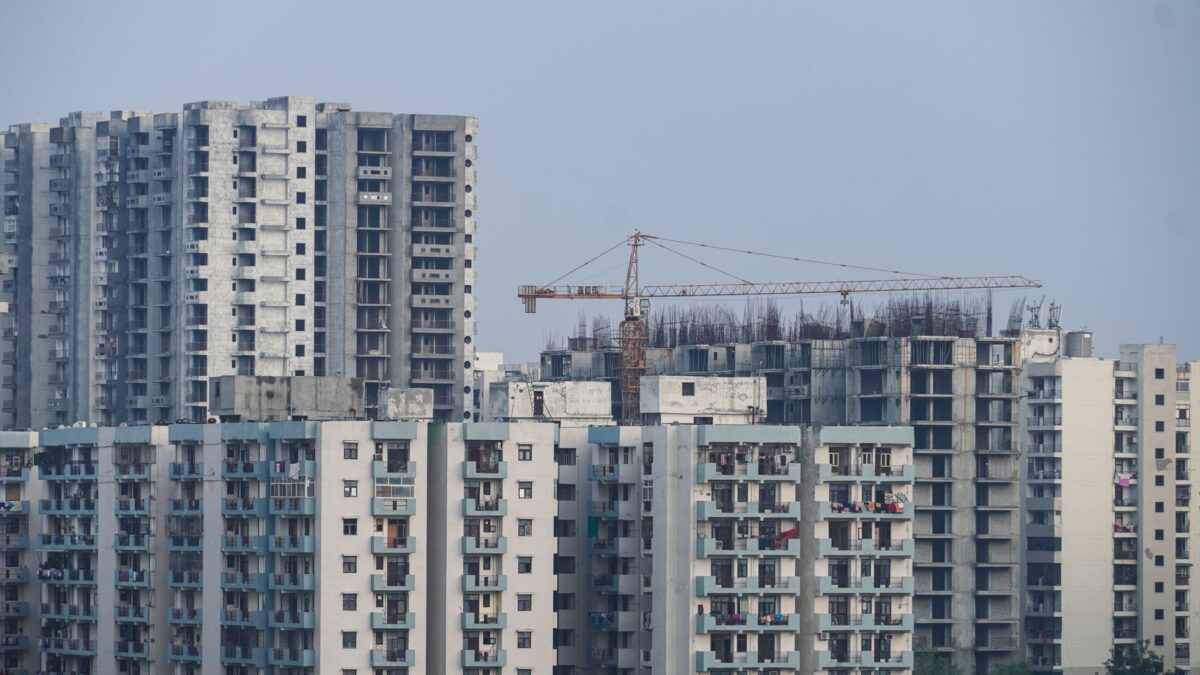
Catalonia delivered only 22% of the officially protected homes it promised in a 2007 housing pact, and its population has grown more than twice as fast as its stock of homes since 2008. Those are the findings of an analysis by the newspaper Ara, based on Catalan government data and figures from Idescat (Catalonia’s statistics institute).
The analysis appears on the eve of Spain’s general elections, as the main parties set out opposing housing programs. Several want to repeal the housing law that allows rent caps in “stressed” zones, while others want to extend it.
The numbers behind the shortfall
- The 2007 National Pact for Housing, signed by the Generalitat (Catalan government) and social agents, aimed to build or start 160,000 protected homes (known as HPO) before 2016 and to put 62,000 empty apartments on the market. Only 35,138 protected homes were promoted, which is 22% of the target, according to the Catalan administration’s own data.
- Protected homes started in 2015 numbered 3,128, or 70% of those under way in 2008. Completions that year were 3,517, which is 44% fewer than in 2008.
- Across the whole market, 16,562 homes were finished in 2015, which is 76.7% fewer than in 2008. Homes under way totaled 19,315, which is 33% fewer than when the bubble burst and 85% fewer than at the 2006 peak.
- Since 2008, Catalonia has gained 10.4% in inhabitants, nearly 775,000 people, and 4.6% in properties, fewer than 175,000.
- The current Sectoral Territorial Housing Plan (PTSH) says 25,000 homes a year must reach the market to meet new household demand. That is about 8,500 more than were offered in recent years. The 2007 pact had expected 40,000 new households a year until 2016.
Money and powers split across three levels
The 2007 pact set the Generalitat’s direct housing spending at 2% of its total budget, about 617 million euros. According to Ara’s calculations using the UN-based COFOG classification, the combined investment of all administrations in Catalonia has never exceeded 2% of total spending. Joint investment passed the 617 million euro threshold only in 2022, and only in nominal terms, without adjusting for the rising cost of living. Ara notes these are budgeted figures, not necessarily executed, and that they include urban planning work such as street lighting.
At the state level, the 2023 general budgets allocated 0.44% of Spanish GDP to housing: 0.19% as tax aid and 0.25% as spending. Miquel Morell, vice-president of the territorial economy commission of the Association of Economists, says the State has stepped back from financing social housing since the 2013 State Housing Plan. He describes the system as “a ticking time bomb”: the money belongs to the State, the powers to the Generalitat and the land to the municipalities.
Josep Maria Aguirre, a professor of administrative law at the University of Girona, says Spain’s parliament must be pushed to provide funding, and that talk about housing does not show up in budgets. He calls regulatory measures necessary but “patches” that cannot solve the problem alone.
What Catalonia has done instead
Ara lists the public measures taken in place of large-scale building: the Catalan Housing Agency, a registry of applicants for protected housing, permanent protected status so public stock is not lost early, penalties for vacant apartments, mandatory social rent offers from large holders before evictions, and longer rental contracts.
What it means for renters and buyers
The rules renters live under depend on the result. The PP and Vox both propose repealing the housing law, which would remove rent caps and stressed zones. Junts also rejects price caps and the law’s intervention model. The PSC defends the current regulation, and the Front Ampli proposes rent caps.
Party proposals on housing
- PSC: reform the constitution to make housing a fundamental right, spend 1% of annual GDP on housing, consolidate the state public stock and tax vulture funds progressively.
- Front Ampli: the same constitutional reform, 1% of GDP, 1.5 million public homes in 12 years and an expropriation law for vulture funds.
- ERC: free, immediate transfer to the Generalitat of all SAREB and Casa 47 properties and land, and 1.5% of state GDP for housing.
- Junts: full, free transfer of SAREB assets, more supply, tax cuts and tougher action on illegal squatting.
- PP: repeal the housing law, build one million homes under a new land law, and offer tax incentives and deductions for young people.
- Vox: repeal the housing law, reform the land law, and give Spaniards “national priority” in access to protected housing.
Source: Ara