Nov. 11 Strike: Metro, Rodalies and Buses Must Run 25% at Peak Hours
Catalonia set minimum services for the Nov. 11 general strike: 25% of transport at peak hours, 50% on the airport bus, plus hospital and school rules.

Commuters in Barcelona and across Catalonia will get only a quarter of the usual Metro, Rodalies, tram and bus service at rush hour during the general strike on Nov. 11. The Generalitat (Catalan government) has published the minimum services it is requiring for the day, Ara reported, and they reach well beyond transport into hospitals, schools, emergency lines and public media.
The decree comes from the Department of Business and Labor and carries the signature of its minister, Miquel Sàmper.
Transport: 25% at peak times, 50% on the airport bus
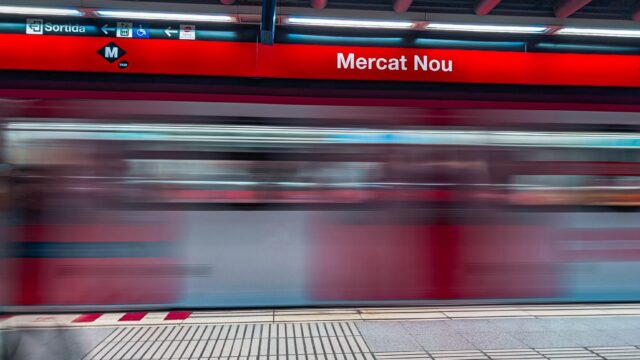
Rodalies (the regional commuter rail network), the metro, Ferrocarrils de la Generalitat (FGC, the Catalan government’s railway), the tram and both urban and interurban buses must provide 25% of their normal service during two peak windows. The morning window runs from 6:30 a.m. to 9:30 a.m. The evening one runs from 4:30 p.m. to 9:00 p.m.
The bus linking Barcelona with the airport gets a higher floor and has to run at 50%.
Goods transport is limited to what the decree calls “what is essential”: supplies for health centers and pharmacies, and perishable products that cannot be kept for more than 24 hours.
Hospitals, clinics and pharmacies
Emergency departments will work as normal. The same applies to special units, which the order lists as ICU, coronary care, dialysis and childbirth, and to urgent medical transport. The rest of primary care will run with 25% of its staff. On-call pharmacies stay open.
Schools and daycare centers
Every school, high school and daycare center must have one member of its management team on site. In preschool and primary education, the minimum is one teacher for every six groups of pupils. Special education must keep 50% of its staff, and daycare centers 33%. Supervision during lunch and complementary activities is also set at 33%, so that children are watched and kept safe.
For families, that means schools will be open but with very few staff, and normal lessons are unlikely to run in most classrooms.
Emergency lines, firefighters and utilities
Emergency call services such as 112, firefighting teams and the security of basic supplies (water, electricity and gas) must keep between 70% and 85% of their staff, depending on the service. The government says these levels are there “to protect life and public health.”
Funeral services also have minimums: 85% for collecting the deceased and 50% for administration and support for families.
Public radio and TV
Public radio and television must broadcast 50% of their usual news programming. They must also air any emergency notices issued during the day, whatever the strike’s effect on their schedules.
What it means for people in Barcelona
Anyone who travels by Metro, bus, FGC or Rodalies on Nov. 11 should expect three out of four regular trains and buses to be missing in the morning and evening rush. Travelers heading to El Prat have slightly better odds, with half of the usual airport bus service required.
Patients with emergencies or treatment in the special units listed should be seen as usual, while routine primary care appointments face a sharply reduced staff. Parents of young children will find schools open under the minimum ratios set by the decree.
The minimum services cover the whole of Catalonia on the day of the strike.
Source: Ara