General Strike Over Housing Halts Catalan Industry, Roads
Catalonia's first major general strike in 14 years, called over housing, drew 400,000 by organizers' count and 55,000 by police. Turnout figures differ.

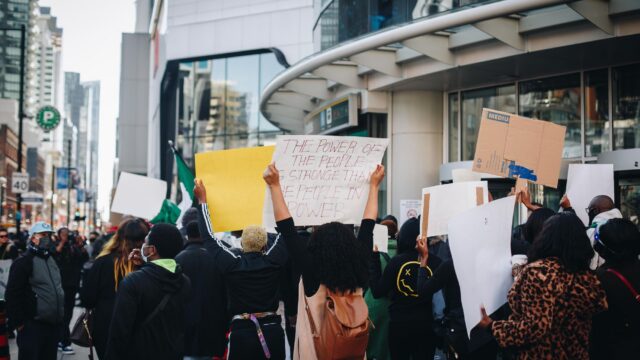
A general strike over housing stopped a good part of economic activity in Catalonia on Wednesday, the first major walkout of its kind in Spain in 14 years, according to the Catalan newspaper Ara. Roads were blocked, factory lines went idle and large crowds marched through the country in the afternoon.
The organizers called the day a “flagrant victory.” The numbers behind that claim are disputed, and the strike is already being read as an early signal for a coming election campaign.
Two very different counts of the crowd and the turnout
The biggest march took place in Barcelona. Organizers said 400,000 people took part, while the Guàrdia Urbana (Barcelona’s city police) put the figure at 55,000.
Participation at workplaces is also contested. The major unions CCOO and UGT reported an 84% turnout. The employers’ associations Pimec and Cecot gave 8% and 6.7% respectively. Ara notes that teleworking complicates any measurement: it was the first big shutdown to coincide with widespread remote work, and the use of electricity, the traditional yardstick for strike participation, is distorted as a result. UGT’s Catalan leader, Camil Ros, accused firms that had staff work from home of “digital strike-breaking.”
Industry and roads stopped from Tuesday night
According to the major unions, production lines at the main Catalan industries went quiet from Tuesday night. They named Ficosa in Viladecavalls, Nestlé in Girona, Repsol Fuels in La Pobla de Mafumet, Grifols in Parets del Vallès and Seat in Martorell. The CGT and the Tenants’ Union added that Amazon deliveries and several companies in the 22@ district were halted. Many of the country’s main roads were blocked for hours, which disrupted travel across Catalonia.
Teleworking made pickets and road blocks less effective at service-sector companies, Ara reports.
An unusually wide group of organizers
The slogan was “Living costs us our life.” The main demand was housing, and the organizers ranged from the Tenants’ Union to a bloc of smaller unions (CGT, IAC, Co.bas, CNT, COS and SO) and to CCOO and UGT, the two largest unions. The Tenants’ Union, despite its name, has no legal status as a union and now asks to be officially recognized as one.
The CGT, the third largest union in Catalonia, was prominent at the pickets. Ara reports that it is the fastest-growing union in the country by membership, which the organization itself attributes to its confrontational approach.
Earlier general strikes in Catalonia included the country shutdown of October 3rd, the 8-M strikes and one in support of Palestine. For those, the large unions mostly called partial stoppages, so this was the first full-scale general strike for many younger workers. Ara described a strong youth presence at the afternoon marches. The economist Josep Oliver of the Autonomous University of Barcelona (UAB) told the paper that, “for the first time,” middle-class children are also losing purchasing power.
What it means politically
Some commentators had framed the strike as aimed at the opposition parties PP and Vox rather than at the Spanish government, and parties from the PSOE to the Broad Front have embraced it. The Confederation of Tenants’ Unions rejected that reading at the end of the day. Its spokesperson, Aldo Reverte, said: “Whoever governs, we will not stop.”
The tenants’ groups name the PSOE as responsible for the housing crisis, saying it was not ambitious enough. CCOO and UGT also criticize Pedro Sánchez’s government, though less sharply. Their Catalan leaders, Belén López and Camil Ros, aimed much of their criticism at employers and the political majority. The Tenants’ Union also denounced police violence against housing demonstrators in cities such as Madrid, blaming the National Police.
The PP, meanwhile, attacked the unions. Isabel Díaz Ayuso spoke of “union trash,” and the party’s X account referred to the unions’ seafood feasts.
What’s at stake for renters and the next steps
The Confederation says the strike is “only the beginning” and warns of more mobilizations, including possible rent strikes, if administrations and the next national government do not act on housing. Its demands include recovering empty apartments, ending tourist apartments and speculative buying, expanding public housing, stopping evictions and amending the constitution so the right to housing outranks freedom of enterprise.
Residents who want to understand how strike calls are handled locally can consult this guide to notice rules and minimum services for strikes.
Source: Ara