General Strike Hits Catalonia With Road Blocks and Metro Cuts
Catalonia's Nov. 11 general strike cuts Barcelona metro and bus to 25% of service at rush hour and closes roads. Minimum services and rallies explained.
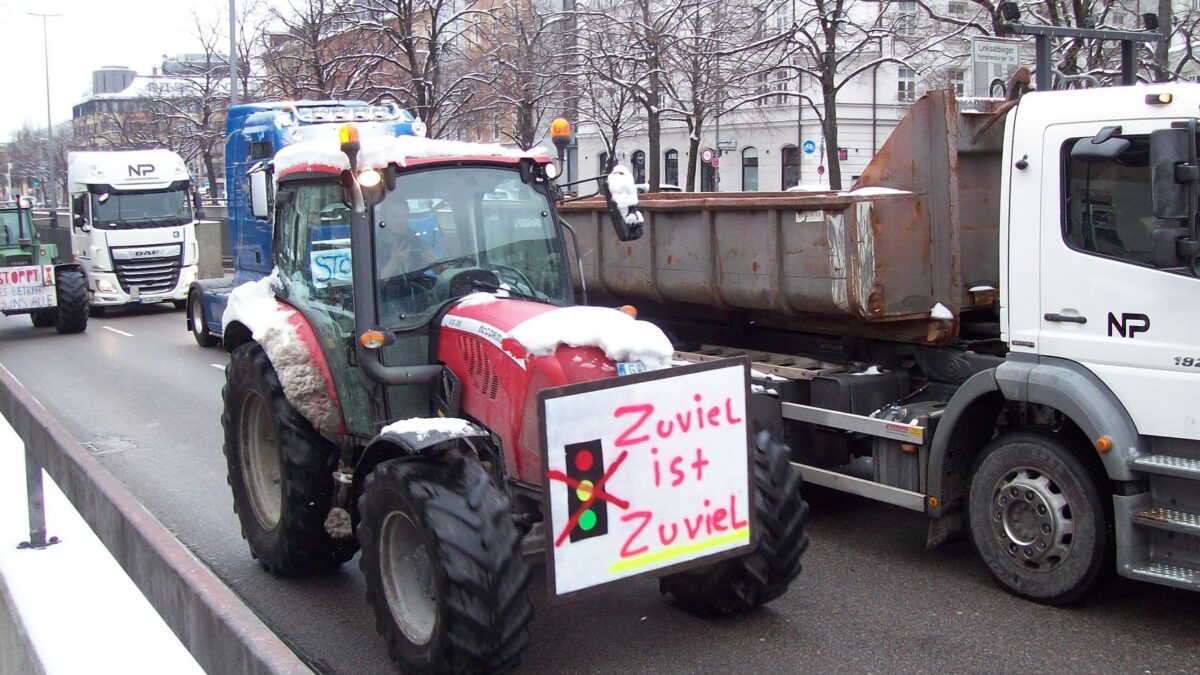
A general strike is under way across Spain and Catalonia on Wednesday, Nov. 11, and it is already disrupting travel in and around Barcelona. Barcelona’s metro and bus network runs at a fraction of normal service, and pickets have closed roads and campus entrances, according to the news site El Nacional.
Unions and tenant groups called the stoppage, the first general strike in Spain in a decade. It began as a response to the failure of the housing decrees in the Spanish Congress, shortly after the case of Maricarmen, a Madrid resident who died in hospital after being evicted from her home.
What it means for getting around Barcelona
For public transport, the authorities set minimum services of 25% in the rush-hour windows, from 6.30 to 9.30 and from 16.30 to 21 hours. No minimum services were decreed for the rest of the day.
At 6 a.m. the metro was running but buses were not. Connecting corridors between metro lines were closed, so passengers had to change lines by going outside. The shuttle bus for the L2 was out of service and is due to run only within the minimum-service hours. TMB (Barcelona’s bus and metro operator) warned that access to metro stations may be altered and pointed riders to its TMB App.
The strike follows a difficult Tuesday on Rodalies (Catalonia’s commuter rail network). After the Urda accident, in which 69 people died, including a Renfe driver, a strike was called for Tuesday and Thursday. El Nacional reports that drivers did not respect the minimum services from the first hours of Tuesday.
Road closures across the region
Traffic cuts extend beyond the city. Access to Barcelona is blocked on both the Meridiana and the Diagonal, and the Servei Català de Trànsit (Catalan traffic service) recommends avoiding the AP-7, which is cut near Sant Gregori in Girona and near Llinars del Vallès.
The Ronda Litoral has been closed in both directions since shortly before 6 a.m. About 200 people dressed in black and carrying banners occupied the road near the Drassanes. The banners read “Aturem Barcelona” (Let’s stop Barcelona). Other closures reported in the Barcelona area include:
- the B-140 access to CIM Vallès in Santa Perpètua de Mogoda;
- the A-2 at El Prat de Llobregat and Sant Joan Despí toward Barcelona;
- the B-10 in l’Hospitalet de Llobregat toward Trinitat, exit 18A;
- the AP-7 at Santa Perpètua de Mogoda, exit 145;
- the roundabout at Mercabarna, the wholesale market complex.
In the Lleida area, the LL-11 is closed in both directions, as are the A-2 exits 467 at Alcoletge and 507 at Tàrrega. The C-25 at Calldetenes toward Lleida and the BV-4511 at Sant Fruitós de Bages are also cut.
Pickets at workplaces and campuses
About a hundred people have blocked the main entrance of the Seat plant at the Ca n’Amat industrial estate between Martorell and Abrera since early morning. Workers on the shift due to start at 5:45 could not get in, and the entrance from the A2 was cut. Pickets burned tyres there. At the Universitat Autònoma de Barcelona (UAB), people in black placed containers at several points to block entry to the campus, and pickets also stood outside companies on site.
On Tuesday, university students cut the Diagonal in both directions near the Palau Reial, according to the same report. They walked out of the Universitat de Barcelona physics and chemistry faculties at about 11 a.m.
Health services and policing
The Generalitat (Catalan government) set minimum services of 25% for non-urgent care at primary care centres (CAP). Urgent and continuous-care centres (CUAP, PAC and PADES) work as usual. Hospital emergency rooms, intensive care, dialysis, neonatal units and deliveries keep running, urgent surgery goes ahead, and the rest of the health system operates as on a public holiday. Health transport is limited to emergencies, cancer treatment, dialysis, oxygen therapy and urgent tests. Pharmacies keep their normal service.
The Mossos d’Esquadra (Catalonia’s police) deployed a large force of several thousand officers, well above the usual number. The force expected serious disruption and major mobility collapses by 6 or 7 a.m., with effects on logistics centres, industrial estates, ports and airports.
What the strikers want
The housing demands include rent caps, a ban on flat purchases by so-called vulture funds and a ban on evictions of vulnerable people. The larger unions also want a higher minimum wage. Camil Ros, general secretary of UGT Catalunya, said at a picket at the TMB depot in Zona Franca that the strike aims to “influence” the Nov. 29 elections so that housing and wages are discussed.
What happens next
Organizers called a demonstration at 17:30 at the Jardinets de Gràcia in Barcelona. Comissions Obreres (CCOO) union pickets are called for 12 h outside the Borsa de Barcelona, the city’s stock exchange.
Source: go.eln.cat