Mossos Fall Tests Fail to Show How Mango Founder Isak Andic Died
Mossos mountain officers recreated Isak Andic's fatal Montserrat fall and told the judge they cannot conclude it was a homicide. Here is what their report says.

Mountain officers from the Mossos d’Esquadra (Catalonia’s police) told a judge on Friday that their reconstruction of the fall that killed Mango founder Isak Andic did not show whether his death was an accident or a killing. The two officers stood by a report in which several simulated falls, including slips, trips and pushes, produced no conclusive result.
The judge is investigating Andic’s son, Jonathan Andic, for homicide. He was the only person with his father when the businessman fell on a path at Montserrat in December 2024. The officers appeared as witnesses and admitted they could not say with certainty that the death was a homicide.
Four ways to fall, no clear answer
The report was drawn up by two agents of the Mossos mountain intervention unit. After the death, the unit went back to the site seven times to inspect the path, take measurements, test theories of how Andic went over the edge and search for his belongings.
The officers staged falls on the path, the wall and the slope where Andic went down. They tested a forward fall after a trip, a sideways fall after a slip, a forward fall after a push from behind and a backward fall after a push from the front. None of the tests settled how he fell, the report says.
The officers also listed limits of their own method. The person taking part in the tests was tied to a safety rope and landed on a mattress to avoid injury, and that person reacted consciously to each fall. According to the report, those conditions distorted the possible theories.
The path, the shoes and the injuries
Andic was wearing running shoes designed for asphalt. The officers wrote that such shoes are suitable for walking on the Montserrat trail. They found that neither the way the laces were tied, which was firm but not tight, nor the wear on the soles played a deciding part in the fall.
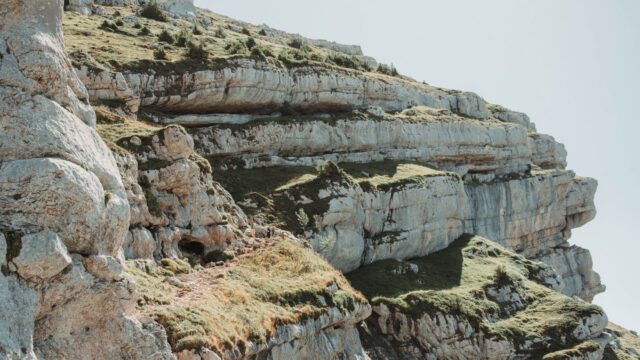
The route father and son were walking needs no special equipment or footwear, the report says, and carries no risk of falling except at the exact spot where Andic went over. There, the path runs along the edge of a slope that ends in a cliff steep enough that stopping after a fall would be close to impossible, in the officers’ words.
Andic dropped about 60 metres. The fall was not clean: he passed several sloping ledges before, roughly 30 metres down, the ground gave way to a sheer ten-metre drop. The investigators concluded that his body was most likely thrown outward from the rock face and landed away from it at the foot of that drop.
His palms were undamaged. Only his right hand had grazes, on the outer side of the knuckles and fingers. The prosecution side in the case points to the intact palms as one sign supporting the theory that he was pushed.
How the search unfolded
Officers from the investigation unit first inspected the area on the day of the fall, stopped at nightfall and returned the next day. That second day they found Andic’s watch and sunglasses on the cliff where he fell.
What it means for the case
The homicide investigation against Jonathan Andic continues before the judge. The mountain unit’s testimony leaves the central question open: the police specialists who studied the site most closely say their tests cannot tell a slip or trip apart from a push. The prosecution still relies on other evidence, such as the state of Andic’s hands, to argue that he was pushed.
Source: 20minutos