Police Say Black Block Group Started Barcelona’s Nov. 11 Riots
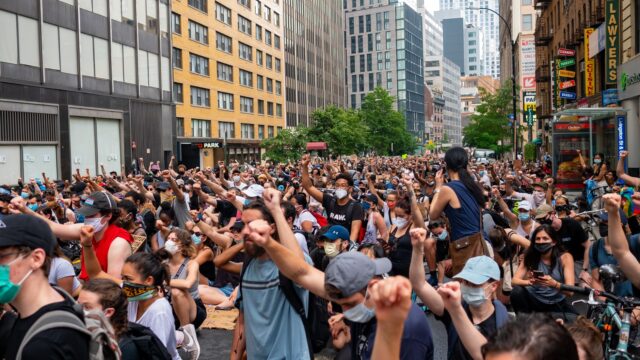
Mossos d'Esquadra say a group of about fifty people in black started the Nov. 11 riots on Passeig de Gràcia during the general strike march.
A group of about fifty people dressed in black, known as a Black Block, set off the riots on Passeig de Gràcia during the Nov. 11 general strike, according to a reconstruction published by Ara that draws on the Mossos d’Esquadra (Catalonia’s police). The newspaper reports that officers tracked the group from the air with drones and helicopters, but struggled to act against it because large numbers of peaceful protesters, including families with children and older people, were around it.
Violence began when the group moved toward plainclothes officers near the Font Monumental, and it then spread to shops on Passeig de Gràcia and Gran Via de les Corts Catalanes.
How the riots began on Passeig de Gràcia
The unions behind the strike had called a single march, but it split. To be more visible and keep their members together, some unions gathered a few streets lower down, which produced three separate but nearby demonstrations, Ara reports.
From the air, the Mossos spotted the group beside Casa Seat, in the Jardinets de Gràcia. Its members wore black from head to toe and carried backpacks, technical goggles and even umbrellas for protection. They had a banner with anarchist symbols. When the Jardinets march started down Passeig de Gràcia, they moved much faster than everyone else, always together.
Just before the junction with Gran Via de les Corts Catalanes, the group began painting graffiti and kicking some stores, including a Nike shop. The police then moved from watching to responding and sent in “fures,” the Mossos’ plainclothes agents, into the crowd.
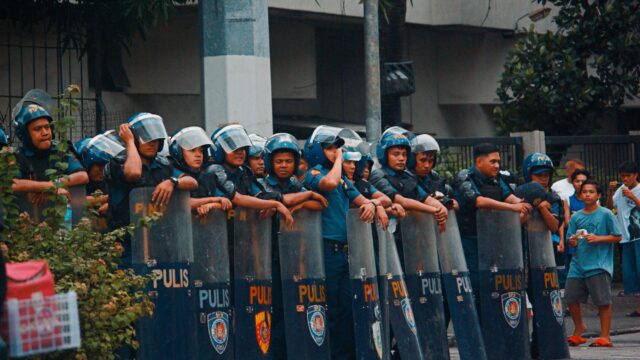
At the Font Monumental the group noticed the plainclothes officers and went toward them, wanting hand-to-hand contact, according to the police account. That was the trigger. The plainclothes agents pulled back, and the Mossos called in their public order officers, the Brimo (the force’s riot unit). The group answered by throwing fireworks horizontally straight at the officers, and the first clashes followed.
What happened after the first clashes
After the clash, the group ran and started smashing a number of shops on Gran Via and Passeig de Gràcia. Ara says that, unlike the young people of the Blocus, the anarchists did not loot. Other protesters in the area took advantage of the situation to do so.
When a journalist tried to film, a member of the group would come over and tell them to stop, the paper reports. The aim, according to its account, was to prevent identification from media images. The Mossos were surprised by one detail: anarchists have traditionally vandalized banks, and this time they hit shops of all kinds, some apparently at random, such as a Lego store. The Mossos fear this will become a new pattern within the movement.
According to the police reconstruction, the group then used a distraction. Its members lit the spark that let young people from other collectives, including some linked to the independence left and to the Organització Juvenil Socialista (OJS, a Marxist split from Arran), start fresh disturbances and raise barricades. The paper says the anarchists do not coordinate with the OJS. Almost everyone, whatever their group, was dressed in black.
Police sources told Ara they managed to detain some members of the anarchist group, but that the many people in identical clothing made identification hard. According to the paper, the anarchists tend to leave as a bloc once the riots are under way so that they cannot be arrested.
Who the group is, according to Ara
Ara describes the group as highly organized and experienced in street mobilizations. It says the group is tied to squatted social centers that have existed in Barcelona for decades and is used to acting inside a crowd and blending in.
The newspaper places the movement in a longer history. It points to the 1996 eviction of the Princesa cinema, a self-managed social center at number 14 on Via Laietana, which was followed by a march and serious disturbances in central Barcelona. It also mentions the 2014 protests after the eviction of Can Vies, a center occupied since 1997. The demolition was halted and the building was rebuilt. According to Ara, anarchists were also prominent in the protests of February 2021 over the imprisonment of a rapper, which until now were seen as the latest big nights of unrest in Barcelona.
What this means for the city
The reconstruction is the police version as reported by Ara, and it describes the Nov. 11 violence as the work of a small, organized group inside a much larger and mostly peaceful march. Shops on Gran Via and Passeig de Gràcia were damaged, and the Mossos told the paper that any intervention had to be very precise to avoid hurting the many protesters around the group. They also fear that attacks on shops of every kind may become a pattern.
Source: Ara