Best Viewpoints in Barcelona: 6 Hilltops, Miradors and Bunkers
Barcelona's best viewpoints include Turó de la Rovira, Montjuïc and Tibidabo. Hours, ticket prices and transport for each hilltop and mirador.
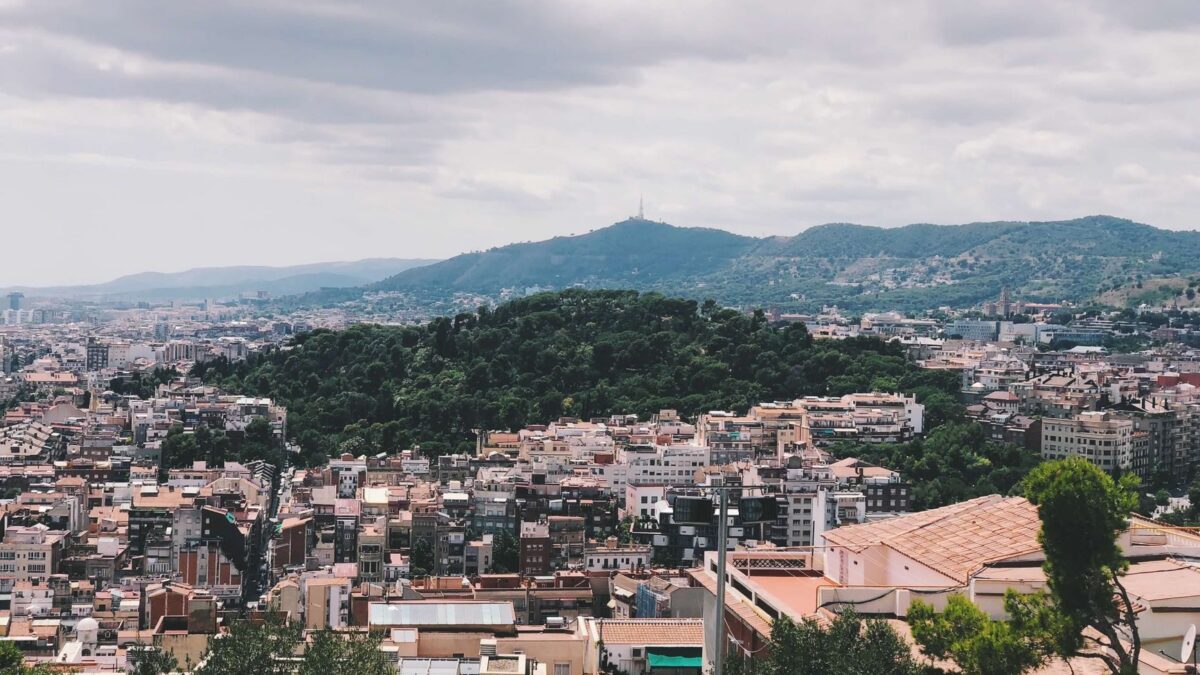
The best views over Barcelona come from its hills: Turó de la Rovira and the Turó del Carmel in the north, Montjuïc above the port, and Tibidabo at the top of the Serra de Collserola. The northern hilltops are public parks, while Montjuïc has a paid castle and a cable car alongside open terraces. Prices and hours below come from the city’s official pages.
Mirador de l’Alcalde and the Telefèric de Montjuïc, Montjuïc
The Telefèric de Montjuïc (the Montjuïc cable car) climbs the east side of the mountain in three stops. The first, Parc de Montjuïc, is on Avinguda Miramar near the upper station of the funicular from Paral·lel, and close to the Joan Miró Foundation, Poble Espanyol and the Museu Nacional d’Art de Catalunya. The second stop, Mirador, leaves you at the Mirador de l’Alcalde, a landscaped terrace that looks straight down on the Port of Barcelona. The Monument a la Sardana is nearby, as is the entrance to the Jardins de Joan Brossa, woodland gardens with zip lines and climbing games for children. The line ends at the castle.
Cabins take up to 8 people, and on the way up you can pick out the Sagrada Família and the Agbar Tower. The line was renovated in 2007 and is accessible for people with physical disabilities, according to the Barcelona city council page on the cable car.
Address: Avinguda de Miramar, 20 – 30. Hours: Nov. 1 to Feb. 28, 10.00 to 18.00; March 1 to May 31, 10.00 to 19.00; June 1 to Sept. 30, 10.00 to 21.00; October, 10.00 to 19.00. Tickets: general fares from 12 to 17.1 euros, with a separate child fare for ages 4 to 12; under 4s ride free. One-way tickets are sold only at the cable car ticket offices. Getting there: during maintenance work, TMB (Barcelona’s bus and metro operator) suggests bus line 150 (Plaça d’Espanya to Castell de Montjuïc), which runs every day from 7 to 21 hours. TMB phone: 932987000.
Castell de Montjuïc, Montjuïc
The fortress at the top of Montjuïc dates from the 18th century. Its current shape follows a redesign by the engineer Juan Martín Cermeño, planned in 1751 and built between 1753 and 1779. The walls, bastions, moats and terraces look over the city and the port, and the castle now hosts exhibitions and activities on historical memory and contemporary culture.
The Museus de Barcelona listing for the castle says a ticket also covers the permanent and temporary exhibitions. Exhibitions and educational activities finish half an hour before the site closes.
Hours: November to February, daily 10:00 to 18:00; March to October, daily 10.00 to 20.00. Tickets: general 12 euros, reduced 8 euros, with free entry for some visitors (check who qualifies on the official page). Getting there: the cable car’s top station, or bus 150 from Plaça d’Espanya.
Turó de la Rovira, El Carmel
The Museu d’Història de Barcelona (MUHBA, the city history museum) calls the Turó de la Rovira the city’s great vantage point. The hilltop is widely known as “the bunkers” because of the remains of a Spanish Civil War anti-aircraft battery, and it is one of MUHBA’s heritage sites.
From the top you can read how Barcelona grew. The museum’s explanation of the view from Turó de la Rovira points to the housing estate districts built in the mid-20th century, which look very different from the 19th-century city below them, and to the shift of urban renewal toward the east of the city after the 1992 Olympic Games.
Parc del Carmel and Mirador de Joan Sales, El Carmel
The Parc del Carmel wraps around the Turó del Carmel, a hill 256 metres high. The Camí de Can Móra road separates it from Park Güell and marks the border between the Horta-Guinardó and Gràcia districts. Beside the Virolai school, the Mirador de Joan Sales looks out over the city from the top of the hill.
Near the viewpoint stand the sanctuary of Nostra Senyora del Carmel, built between 1860 and 1864, and the Hermitage of Nostra Senyora de Fàtima. The park itself has gardens named after the local resident Juan Ponce Perujo, a children’s play area, pétanque courts and a stone work from 1999 by the Scottish sculptor Ian Hamilton Finlay, The Present Order is the Disorder of the Future, cut from Montjuïc stone. Details are on the city page for Parc del Carmel.
Information: the city’s 010 phone line.
Parc de la Creueta del Coll, El Coll
Below the hills behind Park Güell, in the Vallcarca area, this former stone quarry became a public park in the 1980s. It is a green stop between viewpoints more than a lookout itself. Its crescent-shaped lake turns into a shallow public pool in summer, and above it hangs Elogi de l’aigua, a 54-ton reinforced concrete sculpture by Eduardo Chillida held by four steel cables. Paths lead toward the woodland of Park Güell, and the almost two hectares of park are reachable by ramps, as the city page for Creueta del Coll explains.
Address: Pg Mare de Déu del Coll, 77. Hours: Nov. 1 to March 31, daily 08.00 to 19.00; April 1 to Oct. 31, 08.00 to 21.00 (approximate, as the park closes at dusk). Phone: 010.
Tibidabo, Serra de Collserola
At 512 metres, Tibidabo is the tallest hill in the Serra de Collserola and looks over the city and the coast. Its summit holds the Sagrat Cor church, designed by Enric Sagnier, started in 1902 and finished 60 years later, plus the Tibidabo Amusement Park. The Torre de Collserola telecommunications tower is a short walk away.
Getting there: the Tibidabo Funicular, Spain’s first, restarted in June 2021 after modernisation. The Tramvia Blau tram is out of service; replacement bus TC2 runs from Avinguda de Tibidabo Metro station, and TMB bus 111 links the summit with Vallvidrera village and the upper station of the Vallvidrera funicular, according to the Wikipedia article on Tibidabo. Check current timetables with TMB before you go.
Tips for visiting
- Combine the northern hills in one walk: Turó de la Rovira and the Parc del Carmel sit next to each other, and Park Güell lies just across the Camí de Can Móra.
- Parks such as Creueta del Coll close at dusk, so check the season’s closing time if you want to stay for sunset.
- On Montjuïc, the Mirador de l’Alcalde is a cable car stop of its own, so you can get off there before going on to the castle.
- For more free outings, see our list of free parks, viewpoints and museum hours in Barcelona. Families can pair the Jardins de Joan Brossa with other places to visit with kids.
Quick answers
Which Barcelona viewpoint is the highest?
Tibidabo, at 512 metres, is the tallest hill in the Serra de Collserola. The Turó del Carmel is 256 metres.
How much does the Montjuïc cable car cost?
General fares run from 12 to 17.1 euros, children under 4 ride free, and one-way tickets are sold only at the ticket offices.
Is Castell de Montjuïc free?
A general ticket costs 12 euros and a reduced one 8 euros. Some visitors get free entry, so check the conditions on the Museus de Barcelona page.
Where are the bunkers in Barcelona?
They are on the Turó de la Rovira in El Carmel, a hilltop run as a heritage site by the Museu d’Història de Barcelona.
Checked against official sources in November 2026. Hours, prices and rules change: confirm on the official page before you go or apply.