Modernisme in Barcelona: 6 Buildings With Hours, Tickets and Tips
Barcelona's Modernisme sights: Palau de la Música, Sant Pau, Casa Batlló, Casa Amatller and La Pedrera, with ticket prices, hours and resident discounts.
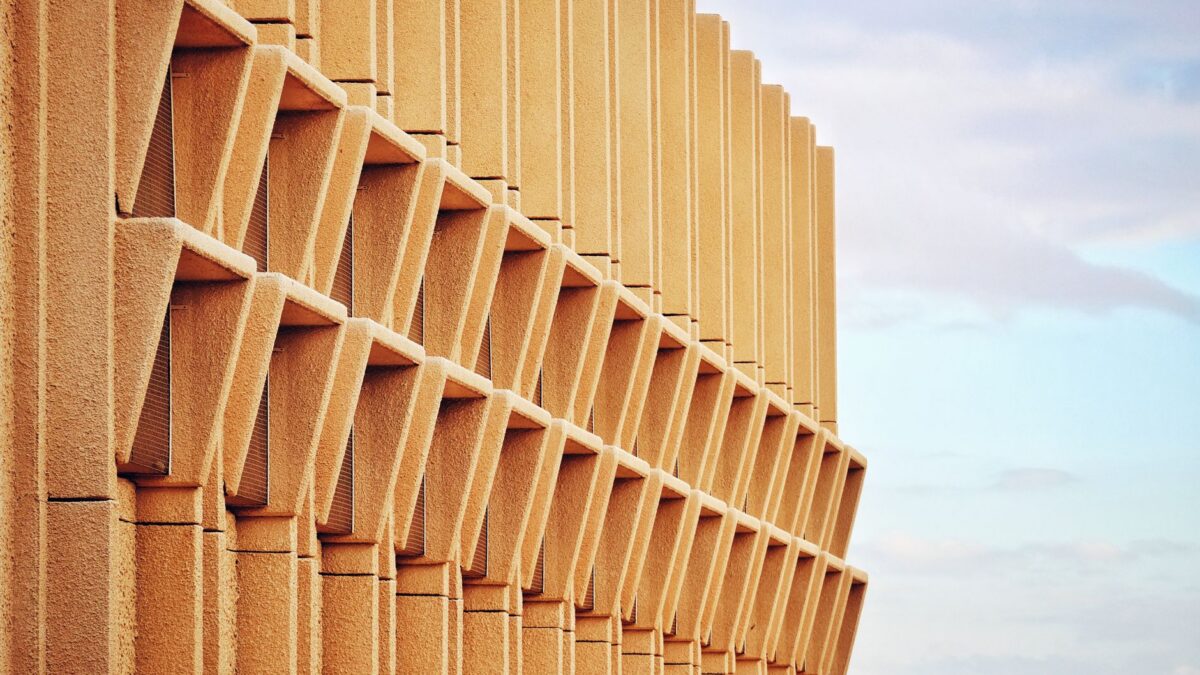
Barcelona’s best-known Modernisme buildings sit in two clusters: the Palau de la Música Catalana in the old town and a run of houses along Passeig de Gràcia, plus the former hospital complex at Sant Pau further north. Most can be visited every day with a ticket, and several give lower prices to residents of Barcelona or Catalonia. Prices and hours below come from each site’s official page.
Palau de la Música Catalana, Sant Pere
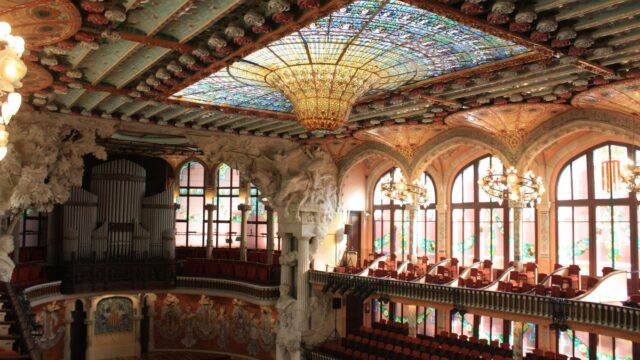
Lluís Domènech i Montaner designed this concert hall as the home of the Orfeó Català (a choral society), and it went up between 1905 and 1908. The building mixes sculpture, mosaic, stained glass and ironwork, and it is the only Modernista concert hall on UNESCO’s World Heritage list. It was paid for by public subscription, a story the guides tell along with the details of the columns, mosaics and glass.
Guided visits run daily and last 50 minutes, with no more than 15 people per group. Tours are offered in Catalan, Spanish, French, English, Italian, German and Chinese. Visit times can shift around concerts, so check the schedule on the Ajuntament’s Agenda 500 listing for the Palau before you go.
Address: Carrer del Palau de la Música, 2 (Ciutat Vella). Hours: daily, 09.00 to 15.30. Tickets: 24 € general; 20 € for over-65s and under-35s; 14 € for residents of Catalonia; 12 € for people with a functional diversity degree below 65%; free for people with a degree above 65% and for children under 10 with a family member. Buying at the box office adds 2 € per ticket.
Passeig de Gràcia, Eixample
The avenue once was the road from walled Barcelona to the separate town of Gràcia, now a city neighbourhood. When Ildefons Cerdà planned the Eixample (the 19th-century grid extension) at the end of the 19th century, he made it one of the district’s widest and most prominent streets. Wealthy business owners then competed to build the most lavish houses on it, which gave architects such as Gaudí, Puig i Cadafalch and Domènech i Montaner a free hand.
A walk between Plaça de Catalunya and Avinguda Diagonal takes you past Casa Lleó Morera near the bottom, then Casa Amatller and Casa Batlló side by side, and La Pedrera higher up. Look down as well as up: the benches double as street lamps and are covered in trencadís (broken-tile mosaic). Shops fill the ground floors, from international brands to Santa Eulàlia, a fashion house more than a century old. The city’s Barcelona.cat page on Passeig de Gràcia covers the avenue’s history. The street has also been the route of large marches, such as the housing strike that filled Passeig de Gràcia, so check for closures on protest days.
Casa Batlló, Passeig de Gràcia
Antoni Gaudí designed Casa Batlló, known for its roof shaped like a dragon’s back. Inside, a tablet with augmented reality comes with the visit, and an app adds audio guides, video and games for children. The audio guide is available in 15 languages, including English, Spanish, Catalan, Mandarin and Cantonese Chinese, and Japanese. A subtitled tablet is available for visitors with hearing loss.
The whole house is open to wheelchair users, and two lifts are reserved first for people with disabilities or reduced mobility and for pregnant women. Strollers for children under 2 can be left at the entrance. Details are on the Casa Batlló visitor information page.
Address: Passeig de Gràcia 43. Hours: 8:30 a.m. to 10:30 p.m.; last entry 9:30 p.m.; ticket office open until 9 p.m. Visit length: about 1 hr 15 min. Tickets: free for children aged 0 to 12. Groups and school visits of 11 people or more use a request form.
Casa Amatller, Passeig de Gràcia
Next door to Casa Batlló, Josep Puig i Cadafalch rebuilt an 1875 building between 1898 and 1900 as the home of Antoni Amatller, a chocolate maker with an interest in archaeology. Its stepped, triangular facade in bright colours recalls Catalan Gothic. With Casa Batlló and Casa Lleó Morera it forms the Illa de la Discòrdia (“Block of Discord”), a block known for three very different houses.
Amatller died in 1910 and his daughter lived there until her death in 1960. Because the family kept the house all that time, much of the 1900 interior survives, including the stained glass ceiling over the stair court and the dining room, salon and Amatller’s bedroom. Look for the small sculptures on the main facade, among them a rat holding a camera. The building is now a house museum and café and holds the Amatller Institute for Hispanic Art, and it opens for scheduled tours, according to Wikipedia’s entry on Casa Amatller. Check tour times and prices with the house directly.
La Pedrera (Casa Milà), Passeig de Gràcia
The Milà family hired Gaudí to build this apartment house, finished in 1910. Its wavy stone facade drew mockery at the time, and locals nicknamed it La Pedrera (“the quarry”). The roof terrace is the main draw: its 30 chimneys look like stone warriors and work as an open-air sculpture garden. The Fundació Catalunya-La Pedrera owns the building and opens the roof, the attic with an exhibition on Gaudí’s work, and an exhibition hall in the main flat. Other flats are still private homes. The Barcelona.cat listing for La Pedrera has the full timetable.
Address: Passeig de Gràcia, 92. Hours: Nov. 2 to Dec. 25, daily 09.00 to 18.30 (closed Dec. 25); Dec. 26 to Jan. 3, 09.00 to 20.30, except Jan. 1, 11.00 to 20.30; Jan. 4 to March 5, 09.00 to 18.30. Last entry is half an hour before closing. Tickets: from 25 € general; 19 € reduced for students with a card, people with an accredited disability and over-65s; 12.50 € for ages 12 to 17; free under 12. Residents of Catalonia pay 12.50 € (adults) or 6 € (juniors) for daytime entry on showing a valid DNI or NIE. The audio guide is included. BCN Card, Ruta del Modernisme and Club TR3SC holders get 20% off (16.40 €); the Bus Turístic ticket gives 10% off (18.45 €). Box office tickets cost 1 € more per person. Phone: 932142576. Groups of more than 10 must book ahead.
Recinte Modernista de Sant Pau, Guinardó
Sant Pau is the former Hospital de la Santa Creu i Sant Pau, a set of pavilions by Domènech i Montaner that now opens to visitors as a heritage site. You can walk it on your own, join a guided tour or rent an audio guide. The Recinte Modernista Sant Pau visit page lists current prices and booking contacts.
Tickets now: self-guided €18 until 2 PM and €17 after; guided tour €21, or €5 for children aged 3 to 11; audio guide €4.00. Reduced prices (€12.60 until 2 PM, €11.90 after, guided €14.70) apply to BCN residents, people aged 12 to 24, over-65s, people with a disability degree under 65% or dependency degree 1 or 2, large-family and single-parent card holders, and Targeta Rosa Reduïda holders. Entry is free for children under 12 with an adult, holders of the Targeta Rosa Gratuita, people with a disability of 65% or more and their companion, and unemployed people with Spanish proof of unemployment (self-guided visit only). From Jan. 1, 2027: self-guided €19 online or €20 at the ticket office before 2 pm (€18 and €19 after), guided €22. The Carnet Jove and Ruta del Modernisme give 50% off; the BCN Card and Library Card give 20% off.
Tips for visiting
- Casa Batlló, Casa Amatller and La Pedrera are a short walk apart on Passeig de Gràcia, so they fit in one morning or afternoon.
- Book online where you can: the Palau charges 2 € more at the box office and La Pedrera 1 € more.
- Residents should carry ID. La Pedrera asks for a DNI or NIE for the Catalonia resident price, and Sant Pau and the Palau also have resident rates.
- At Sant Pau, visiting after 2 pm costs a little less.
- For another Gaudí house in the old town, see our guide to Palau Güell opening hours and tickets.
Quick answers
Which Modernisme building has the latest opening hours?
Casa Batlló, open until 10:30 p.m. with last entry at 9:30 p.m.
Can children visit for free?
Yes at most sites: under 12 at La Pedrera and Sant Pau (with an adult), 0 to 12 at Casa Batlló, and under 10 with a family member at the Palau de la Música.
Is La Pedrera open on Christmas Day?
No. It closes on Dec. 25 and opens on Jan. 1 from 11.00 to 20.30.
Do residents of Catalonia pay less?
Yes. The Palau charges 14 € and La Pedrera 12.50 € for adults; Sant Pau gives reduced prices to BCN residents.
Checked against official sources in November 2026. Hours, prices and rules change: confirm on the official page before you go or apply.