Montjuïc Barcelona: 6 Places to See, From the Castle to the Gardens
Montjuïc hill in Barcelona has a castle, two museums, gardens and the Poble Espanyol. Hours, ticket prices and addresses for six places.
Montjuïc is a hill 177 metres high between the Sants neighbourhood and the port of Barcelona, with a fortress at the top, museums on the city side and gardens on the slopes. Six places on it have published hours or addresses you can plan around: the Castell de Montjuïc, the Jardí Botànic, the Jardins de Mossèn Costa i Llobera, the Fundació Joan Miró, the MNAC and the Poble Espanyol. In winter most of them close between 17:00 and 19:00, so start early.
The Ajuntament de Barcelona (city council) describes the Parc de Montjuïc as one of the city’s green lungs and best vantage points. The hill began to be developed around the 1929 International Exposition. During the Civil War the castle was a prison, and the 1992 Olympic Games completed the change into a place for leisure. In medieval Catalan the name could translate as “Jewish mountain”, a reading supported by the Jewish cemetery that existed there.
Castell de Montjuïc
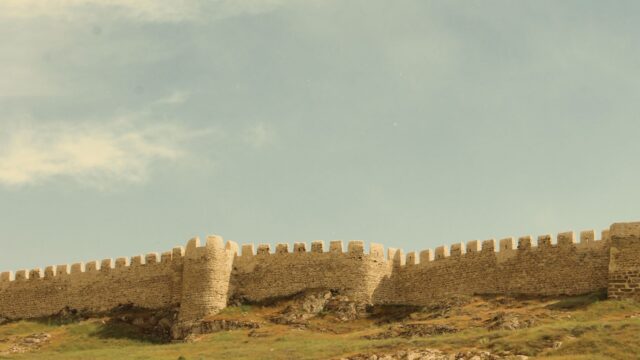
The Castell de Montjuïc is an eighteenth-century fortress at the top of the hill. The engineer Juan Martín Cermeño planned the current design in 1751, and it was built between 1753 and 1779. Walls, bastions, moats and terraces survive, and the terraces look over the city and the port. The castle now holds exhibitions and activities on historical memory and contemporary culture.
It suits visitors who want views and military history in one stop. Our separate article has more on castle tickets and free entry.
Hours: every day, 10:00 to 18:00 from November to February and 10:00 to 20:00 from March to October. Exhibitions and educational activities end half an hour before the site closes. Tickets: 12 euros general, 8 euros reduced. The listing also shows a free category without stating who qualifies. The ticket includes the temporary and permanent exhibitions.
Jardí Botànic
The Jardí Botànic (botanical garden) lies between the castle and the Estadi Olímpic Lluís Companys. It covers 14 hectares in the shape of an amphitheatre with steep slopes and is divided into the five regions of the world with a Mediterranean climate, each planted with its typical landscape. The architects Carles Ferrater, Josep Lluís Canosa and Bet Figueras designed it on disused land, and it opened in 1999. The garden belongs to the Museu de Ciències Naturals (natural science museum). From the paths you can see the Llobregat delta and the Olympic Ring.
Address: Carrer del Doctor Font i Quer, 2. Hours: from Nov. 1 to Jan. 31, every day from 10 a.m. to 5 p.m., closed Dec. 25 and Jan. 1. Closing time gets later through the year and reaches 8 p.m. from June to August. Tickets: 5 euros general, 2.50 euros reduced, 8 euros combined with the Museu de Ciències Naturals. Entry is free for visitors under 16, on Sundays from 3 p.m. until closing and on the first Sunday of the month. Getting there: metro to Plaça Espanya, then bus 50 to the Estadi Olímpic stop. Walk on along the stadium, take the first street on the right and continue to the first junction, where the entrance ramp is across the road.
Jardins de Mossèn Costa i Llobera
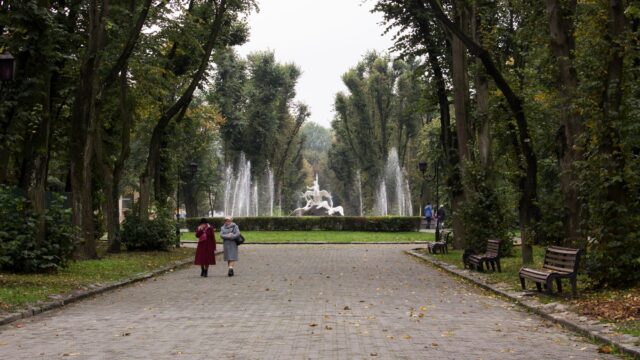
The Jardins de Mossèn Costa i Llobera are a cactus and succulent garden at the foot of Montjuïc, on the side facing the sea. About 800 species from desert, semi-desert, tropical and high mountain regions grow on six hectares. They survive outdoors because this slope has its own microclimate, on average two to three degrees warmer than the rest of the city.
The gardens were created in 1970 by the architect Joan Maria Casamor and Joan Pañella, a gardening school teacher who specialises in succulents, and are named after the Mallorcan poet Miquel Costa i Llobera. Many plants had to be replaced after the frosts of 1985 and 1987. The city says the gardens are ten minutes from the Columbus statue and that many residents do not know them. The view takes in the coastline and the port.
Address: Ctra Miramar, 38. Hours: every day, 08:00 to 19:00 from Nov. 1 to March 31 and 08:00 to 21:00 from April 1 to Oct. 31. The times are approximate because the gardens close at dusk. The city’s page lists no ticket price.
Fundació Joan Miró
Joan Miró created the Fundació Joan Miró himself, and it opened in 1975. The core of the collection is the artist’s own private holdings, shown alongside work by artists of other generations. Josep Lluís Sert designed the building in collaboration with Miró. The foundation also runs temporary exhibitions of 20th and 21st century art, and a free space called Espai 13.
Hours: from Nov. 1 to March 31, Tuesday to Sunday and public holidays, 10:00 to 19:00. On Jan. 5 and Jan. 6 it opens 10:00 to 15:00. It is closed on Dec. 25, Dec. 26 and Jan. 1. From April 1 to Oct. 31 it stays open until 20:00 from Tuesday to Saturday. Tickets: 18 euros general, 12 euros reduced (over 65, students aged 13 to 25 with a card, library card holders). Children under 12, unemployed people and ICOM members enter free.
Museu Nacional d’Art de Catalunya (MNAC)
The Museu Nacional d’Art de Catalunya is a public museum in the Palau Nacional with art from the 10th to the 20th century. According to the city’s museum listing it has the world’s finest collection of Romanesque mural paintings. It also shows Gothic art, European Renaissance and Baroque painters, Catalan Modernisme including Gaudí and Casas, and rooms of art made during the Spanish Civil War. An expansion into the neighbouring Palau Victòria Eugènia is due to be completed in 2029.
Hours: from Oct. 1 to April 30, Tuesday to Saturday from 10:00 a.m. to 6:00 p.m., Sundays and holidays from 10:00 a.m. to 3:00 p.m. Closed Dec. 25 and Jan. 1. The listing gives no Monday hours. Tickets: 12 euros general, 8.4 euros reduced (students, families of 2 adults and 1 child, large family card holders, adult groups). A basic ticket for 2 euros gives access to the building and the viewpoint terraces only. Entry is free for children under 16, people aged 65 and over, on Saturdays from 3 p.m. and on the first Sunday of the month. A ticket is valid for two days within one month of purchase.
Poble Espanyol
The Poble Espanyol (Spanish Village) is an open-air architectural museum built from 1926 to 1929 for the International Exposition. The Wikipedia entry on the Poble Espanyol counts 117 full-scale buildings copied from different parts of Spain and arranged as a small town. The architect Puig i Cadafalch promoted the idea. The architects Francesc Folguera and Ramon Reventós, the critic and painter Miquel Utrillo and the painter Xavier Nogués carried it out after travelling some 20,000 kilometers and visiting over 1,600 sites. Replicas include a gate from the medieval walls of Ávila and the town hall of Vall-de-roures. The buildings house a theater, restaurants, artisan workshops and a museum of contemporary art.
Address: Avda. Francesc Ferrer i Guardia, 13, approximately 400 metres from the Montjuïc fountains. Tickets: the MNAC sells a combined ticket with the Poble Espanyol for 20 euros. Opening hours and the standard price are not in our sources, so check the venue’s own website before you go.
Tips for visiting
Metro, bus, funicular and cable car all reach the hill, and the city’s Montjuïc Park website has a map of the sights and advice on which transport fits each part of the mountain. The castle is at the top and the MNAC and Poble Espanyol are on the Plaça Espanya side, so group your stops by area.
- From November to February, plan the Jardí Botànic and the castle for the morning or early afternoon. They close at 5 p.m. and 18:00.
- Both the Fundació Joan Miró and the MNAC list an Articket at 38 euros. Check which museums it covers before buying single tickets for both.
- The first Sunday of the month is free at the MNAC and the Jardí Botànic.
- Other gardens named by the city are the Jardins de Mossèn Cinto Verdaguer, which have flowers all year, and the Jardins de Laribal, with waterfalls and the Font del Gat fountain.
- The Jardins Joan Brossa have games and zip lines for children. For more ideas, see our list of places to go in Barcelona with kids.
Bird and plant watchers have plenty to look for. The city’s Biodiversity Atlas records 739 plant species and 288 tree species in Montjuïc and Poble-sec, 61 species of nesting birds and 27 species of butterflies. The city’s information line for the park is 010.
Quick answers
How high is Montjuïc?
The hill is 177 metres high, according to the Barcelona city council.
Which Montjuïc sights are free on the first Sunday of the month?
The MNAC and the Jardí Botànic both list free entry on the first Sunday of the month. The MNAC is also free on Saturdays from 3 p.m., and the Jardí Botànic on Sundays from 3 p.m.
How do I get to the Jardí Botànic by public transport?
Take the metro to Plaça Espanya and then bus 50 to the Estadi Olímpic stop. The entrance ramp is a short walk past the stadium.
Is the Fundació Joan Miró open on Mondays?
Its winter timetable runs from Tuesday to Sunday and on public holidays, so a regular Monday is not listed.
Checked against official sources in November 2026. Hours, prices and rules change: confirm on the official page before you go or apply.