Catalan Christmas Food: Escudella, Canelons, Torrons and Cava
The Christmas Day and Sant Esteve menus course by course, the main types of torró, where Barcelona residents shop for them and how restaurants handle 24 to 26 December.
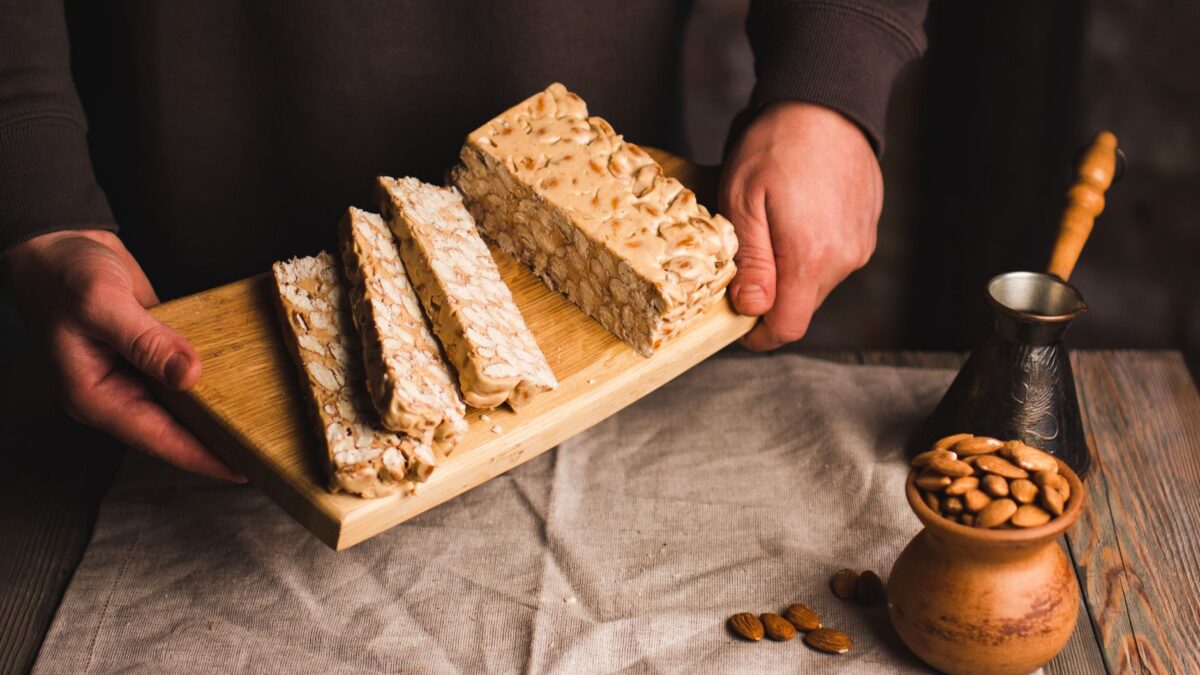
Catalan Christmas food centers on two meals. Lunch on 25 December is escudella i carn d’olla, a broth with large pasta shells followed by the meats and vegetables cooked in it. On 26 December, Sant Esteve, a public holiday in Catalonia, families eat canelons made with leftover roast meat. Torrons (nougat), neules (rolled wafers) and cava close both meals.
What do Catalans eat on Christmas Day?
In Catalonia the big family meal is traditionally lunch on 25 December. Elsewhere in Spain the main event is often dinner on Christmas Eve (Nochebuena), and many families in Barcelona now mark both. The classic Christmas lunch runs in this order:
- Sopa de galets. The first course is the broth from the pot, served with galets, large shell-shaped pasta. Some families stuff the biggest shells with minced meat. The shape is so tied to the season that giant galets are part of the city’s Christmas lights.
- Carn d’olla. The second course is everything that cooked in the broth: meats, chickpeas, potato, cabbage and other vegetables, plus the pilota, a large meatball of minced meat, egg, garlic and parsley that is sliced at the table. Folklorist Joan Amades described the traditional pot as one of “four meats”: pork, veal, hen and lamb.
- A roast. Many homes follow with roast poultry such as turkey, capon or duck, often with dried fruit.
- Sweets and cava. Torrons, neules and other sweets come out with coffee and a bottle of cava.
The Ajuntament’s popular culture office calls escudella i carn d’olla the typical Catalan Christmas dish. Recipes vary from house to house: some add botifarra sausage, pig’s ear or bacon to enrich the broth.
Why are canelons eaten on Sant Esteve?
Sant Esteve (St Stephen’s Day) on 26 December is a public holiday in Catalonia, though not in most of Spain. In 2026 it falls on a Saturday, and it appears in our Barcelona public holidays calendar. The dish of the day is canelons: pasta sheets rolled around a filling made from the Christmas roast and the meats from the escudella pot, covered with béchamel sauce and grated cheese, then baked.
The Ajuntament dates canelons in Barcelona to the late 19th century, when Italian cooks working for wealthy families introduced them. The Catalan version differs from the Italian one: it uses roast meat rather than minced meat cooked in a sofregit (slow-fried onion and tomato base). The usual explanation is that the dish uses up Christmas leftovers, though the city’s own Christmas pages note that food historians do not all agree on this. Today seafood, mushroom and vegetable canelons are common too.
Which torrons and sweets go on the table?
Torrons are nougat bars of almonds or hazelnuts, honey, sugar and egg white, probably of Arab origin and eaten in Catalonia since at least the Middle Ages. Several types have protected status, shown on the label as a protected geographical indication (IGP):
| Sweet | What it is | Where it comes from |
|---|---|---|
| Torró de Xixona (Jijona) | Soft nougat of ground toasted almonds and honey | Xixona, Alicante (IGP) |
| Torró d’Alacant (Alicante) | Hard nougat with whole toasted almonds, between sheets of wafer | Also made in Xixona (IGP) |
| Torró d’Agramunt | Hard, porous nougat with whole toasted hazelnuts or almonds, in round or rectangular tablets | Agramunt, Lleida (IGP) |
| Torró de crema cremada | Soft egg-yolk nougat with a caramelized sugar top | Common in Catalan pastry shops |
| Neules | Thin, crisp wafers rolled into tubes | Catalan tradition |
Neules are among the oldest Catalan Christmas sweets. A text from 1267 mentions them at a Christmas meal hosted by King Jaume I. They were flat at first and took their rolled shape later. People once dipped them in spiced wine; today they are more often served with cava. Chocolate torrons and new flavors fill shop shelves alongside the classics.
Cava, Spain’s traditional-method sparkling wine, is the toast from Christmas Day through New Year’s Eve to Three Kings Day on 6 January. Most of it comes from the Penedès area west of Barcelona, around Sant Sadurní d’Anoia, although the Cava designation of origin also covers vineyards in other regions. The Ajuntament’s guide to Christmas culinary traditions covers the history of each dish. If you want to take cava or turrón home, see our guide to what to buy in Barcelona.
How do the tió and the pessebre fit in?
The tió is a log with a painted face that children “feed” from 8 December, the Immaculate Conception holiday, under a blanket to keep it warm. On Christmas Eve or Christmas Day, depending on the family, they beat it with sticks while singing, and it “poops” sweets: torrons, neules and candies appear under the blanket, so the tió often supplies the dessert. The best-known version of the song asks it to drop torrons rather than salted herrings.
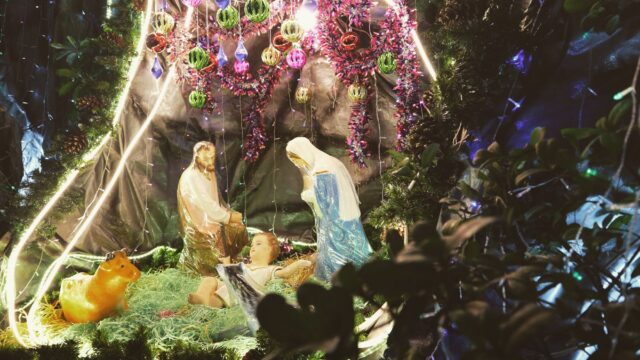
The pessebre (nativity scene), built from cork, moss and wood, goes up in many homes in December. Look for the caganer, a squatting figure hidden in a corner. Our guide to nativity scenes in Barcelona explains where to see the big displays and buy figures.
Where do locals buy torrons and Christmas food?
- Municipal markets. Barcelona’s covered markets, from La Boqueria and Santa Caterina to Sant Antoni and the neighborhood markets, sell torrons, cured meats, cheese and the poultry and meats for escudella. Many stalls take advance orders for capon or turkey before Christmas. Most food markets open Monday to Saturday and close on Sundays and public holidays; each market posts its own Christmas hours. Check the Mercats de Barcelona website for your nearest one.
- Pastry shops and torró shops. Neighborhood pastisseries and specialist torroneries make their own torrons, neules and crema cremada. They are the place for fresh nougat, sometimes sold by weight, and for advance orders.
- Supermarkets. Own-brand torrons appear on shelves from autumn and cost much less than artisan bars. Look for the IGP seal if you want the protected Xixona, Alicante or Agramunt types.
Are restaurants open on 24, 25 and 26 December?
Some are, but plan ahead. Many restaurants close on the evening of 24 December and on 25 December, when families eat at home. Those that open usually serve a fixed-price Christmas menu (menú de Nadal), often with escudella, a roast and dessert, and ask for a booking, sometimes with a deposit. Hotel restaurants are a common option on Christmas Day. On 26 December, set lunches built around canelons are widespread. Book by early December for any of these dates, and confirm what the menu includes and what it costs when you book.
Bottom line
If you are cooking, order your capon or escudella meats from a market stall in the first half of December, and buy torrons on a weekday morning, before the final week’s queues. With 25 and 26 December on a Friday and Saturday in 2026, most food shops will be shut for two days in a row, so finish your shopping on 24 December.
FAQ
Is 26 December a holiday in Barcelona?
Yes. Sant Esteve is a Catalan public holiday. In 2026 it falls on Saturday 26 December.
What is the difference between Xixona and Alicante torró?
Xixona torró is soft, made from ground toasted almonds and honey. Alicante torró is hard, with whole almonds set in honey and egg white between wafer sheets.
Is cava only made in Catalonia?
No. Most cava comes from the Penedès area near Barcelona, but the designation of origin also covers vineyards in other Spanish regions.
What do people eat on Three Kings Day?
The tortell de Reis, a ring-shaped pastry with a hidden figure and a dried bean. Our Christmas and Three Kings guide explains the custom.