Catalonia Strike Turnout Ranges From 8% to 84% as Rodalies Halts
Employers and unions gave turnout figures for the Nov. 11 general strike in Catalonia that differ widely. Rodalies stopped and El Prat lost 85 flights.
Employers and unions gave very different turnout figures for the Nov. 11 general strike in Catalonia, according to go.eln.cat. The employers’ group Pimec put participation below 9% of workers, the employers’ organization Cecot said it was under 8%, and the union CCOO (Comissions Obreres, one of Catalonia’s main trade unions) said 84%.
Rodalies (Catalonia’s commuter rail network) failed to run its minimum service of 25% of normal during the morning rush hour and then stopped altogether. Nationwide turnout was lower than in Catalonia, and the unions themselves described participation as uneven.
Electricity use points to modest turnout
The outlet singled out electricity consumption as a less partisan measure. Demand began the day 10% lower than usual, then moved back toward normal and stood 6% below it later in the morning. During the last state-wide general strike, in 2012, the gap was more than twice as large, which the outlet reads as a sign that this strike has drawn fewer people.
Pickets, factories and shops
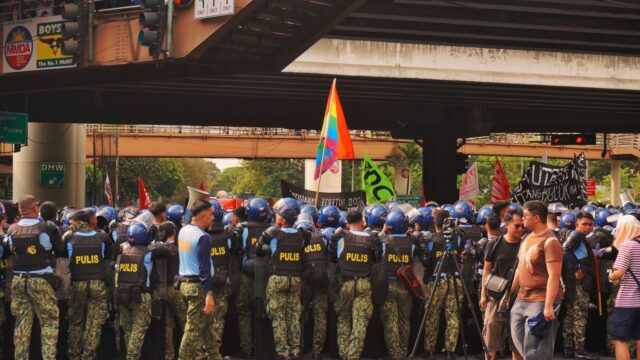
The unions opened the strike on Tuesday night with pickets at Mercabarna (Barcelona’s wholesale food market) and at factories such as the Seat plant in Martorell. Participation faded in the morning, even though the transport stoppage kept many people at home.
Some well-known factories stopped, but most of the industrial sector kept producing. There were no incidents at the pickets, because workers who wanted to enter their plants were able to do so.
In Barcelona’s commercial sector the picture split by area. In the city center, many businesses stayed closed because of the pressure from union marches and fear of disturbances in the afternoon and evening. In the surrounding neighborhoods, most shops and restaurants worked. In other Catalan towns and cities outside the biggest ones, the day looked much like any other.
Columns of pickets walked streets such as the Diagonal and avinguda de Madrid, sticking posters on open shops and asking them to close. Some people overturned rubbish containers. Many shopkeepers lowered their shutters until a picket moved on, then reopened.
Employers blame mobility problems
Pimec said 29% of companies have reduced or stopped activity. It attributed this partly to transport difficulties and incidents that prevent normal work, including at firms where no employee joined the strike. Cecot also said most of the problems it recorded relate to mobility and access to workplaces.
Flights and high-speed trains cut
Aena (the operator of Spain’s airports) reported that up to 10 a.m., 234 planned operations at Spanish airports were canceled, or 5.1% of the total. At El Prat, Barcelona’s airport, the share was higher: 85 departures or arrivals out of 734 scheduled. On high-speed rail, the Barcelona-Madrid line was the most affected, with 24% of services canceled.
What this means for commuters and the city center
For people traveling in and out of Barcelona, the day’s disruption is concentrated on rail and on the Barcelona-Madrid route, while the airport figures show a larger share of cancellations at El Prat than in Spain as a whole. In the center, the combination of marches and closed shops makes for a different day than in the neighborhoods.
The unions are now concentrating on filling Barcelona’s streets with pickets and rallies. A concentration was planned at midday in plaça Universitat, and a joint march was set for the afternoon at the Jardinets de Gràcia.
Source: go.eln.cat