PP Leads 16 of 18 Pollsters Ahead of Spain’s Nov. 29 General Election
The PP leads most polls before Spain's Nov. 29 general election, but the CIS puts the PSOE first. What the numbers say and how a government gets formed.

The Partido Popular (PP, Spain’s main centre-right party) is ahead in 16 of the 18 polling firms that published surveys in the 30 days before Nov. 13, according to the Mapa Electoral tracker cited by idealista/news. Spain votes in a general election on Sunday, Nov. 29.
The exceptions are the state-run Centro de Investigaciones Sociológicas (CIS, the government’s polling institute) and SW Demoscopia, which both put Pedro Sánchez’s Socialists (PSOE) first. Several private pollsters suggest the PP and the far-right Vox could reach a majority together, while the CIS numbers leave room for another PSOE-led government.
What the latest polls show
Recent voting intention estimates compiled by Mapa Electoral:
- 40dB for El País and Cadena SER, Nov. 13: PP 31.5%, PSOE 29.4%, Vox 18.8%.
- Winston for Artículo14, Nov. 13: PP 31.1%, PSOE 26.4%, Vox 18.7%.
- Sigma Dos for El Mundo, Nov. 12: PP 30.8%, PSOE 25.3%, Vox 19.6%.
- CIS, Nov. 12: PSOE 33.3%, PP 25.5%, Vox 18.4%.
The gap carries over into seat estimates. The CIS gives the PSOE between 134 and 143 seats, the PP 98 to 106 and Vox 57 to 65. Most private surveys put PP and Vox combined above the majority line, and some place them close to or above 200 seats.
How many seats a government needs
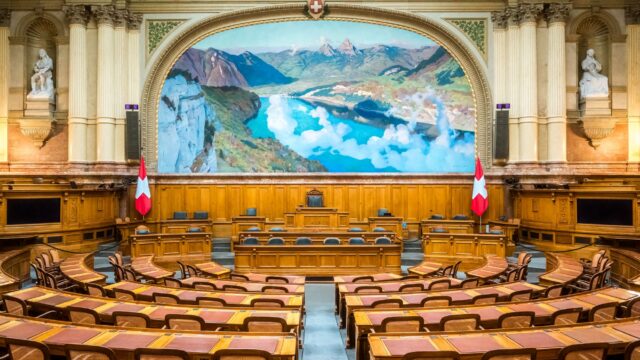
The Congreso de los Diputados (the lower house) has 350 seats, and 176 make an absolute majority. Deputies are elected in 52 constituencies, so a party’s national vote share does not translate directly into seats. That is why regional parties from Catalonia, the Basque Country, Galicia and the Canary Islands can matter far more than their national percentages suggest.
Voters do not choose the prime minister directly. Under Article 99 of the Constitution, the King consults the parliamentary groups and proposes a candidate, who then needs Congress’s confidence. The first investiture vote requires an absolute majority. If that fails, a second vote follows 48 hours later, where more yes votes than no votes is enough.
The possible outcomes
Idealista/news describes four broad scenarios based on polling as of Nov. 13:
- A PP and Vox deal, either as a coalition or with Vox backing a PP government from outside. Vox, led by Santiago Abascal, has said its support depends on commitments on immigration, national identity and public policy.
- A PP minority government under Alberto Núñez Feijóo, relying on other groups to vote for him or abstain.
- Another Sánchez government backed by Frente Amplio, Podemos and regional parties such as ERC, Junts per Catalunya, EH Bildu, PNV, BNG and Coalición Canaria. Junts, the Catalan pro-independence party, ended its agreement with the Socialists in October 2025.
- Deadlock. If no candidate wins Congress’s confidence within two months of the first investiture vote, Parliament is dissolved and a new election is called, as happened in 2016 and 2019.
What it means for people living in Barcelona
Most foreign residents cannot vote in the general election. In general, only Spanish citizens aged 18 or over who are on the electoral roll can vote in national elections; the rules for foreigners voting in Spain’s local elections are different. The next government will still shape policy on immigration, residency, nationality, housing, taxes and public services, all areas that affect international residents, whether they come from the EU, Britain or elsewhere.
Two Catalan parties sit near the center of the arithmetic. Idealista/news calls Junts particularly important to any Sánchez majority after it broke with the Socialists, and ERC is on the same list of possible partners. On the left, Frente Amplio and Podemos are running separately in much of Spain, so the split of votes between them can change how many seats each wins in individual constituencies.
Dates to watch
- Nov. 23: last day new polls can be published, since Spanish electoral law bans publishing them in the five days before the vote.
- Nov. 29: election day. Polling stations close at 20:00, with provisional results after that.
- Dec. 23: the new Congress and Senate hold their first sessions, after which the King begins consultations.
The current government stays on in a caretaker role until a new one is appointed, which could take several weeks or longer if talks drag on.
Source: idealista/news