Bomb Hoax at Zaragoza Station Halts Barcelona-Madrid AVE Trains
A false bomb alert at Zaragoza-Delicias stopped AVE trains on the Barcelona-Madrid line. It is part of a Europe-wide wave of hoaxes, mostly against Italian schools.
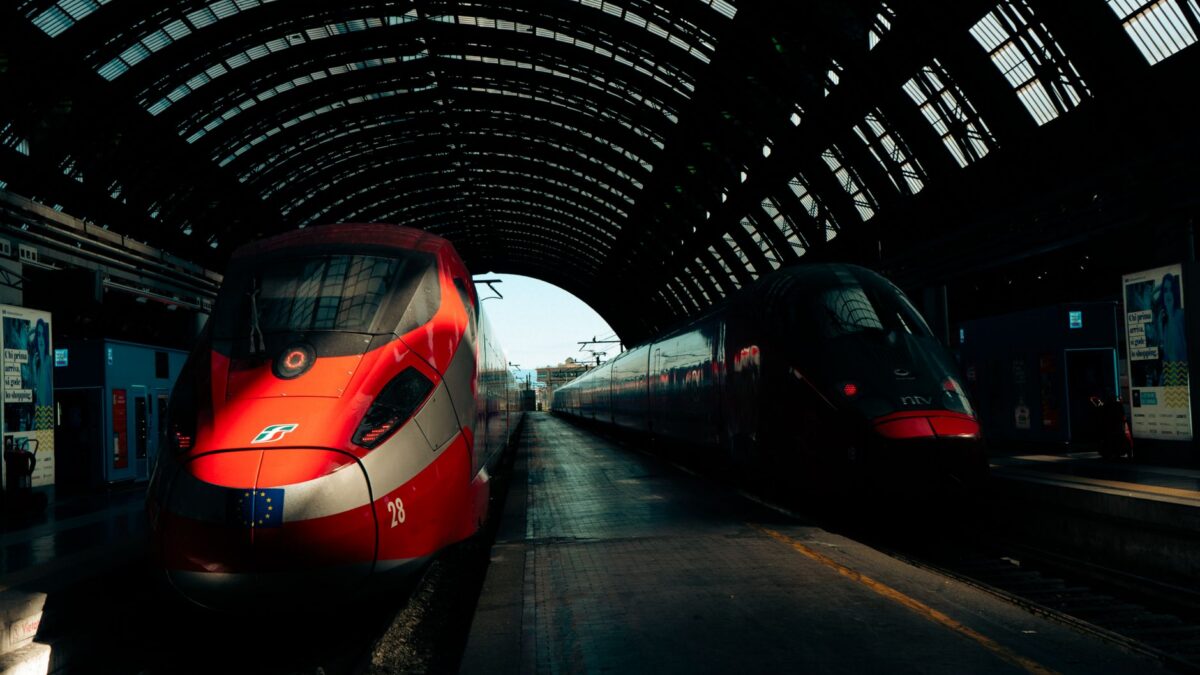
A false bomb alert at Zaragoza-Delicias station forced staff to evacuate part of the building on Thursday and stopped AVE high-speed trains on the Barcelona-Madrid line, according to Catalan public broadcaster 3Cat. Service has since been restored on tracks 1, 2 and 3 of the station.
The alert is one of a series of hoaxes across Europe this week. Most of them have targeted schools in Italy, and a similar warning disrupted the station in Calais, France.
Trains stopped in Zaragoza and Calais
The Zaragoza alert comes while Spain’s rail network, both regular and high-speed services, is already in what 3Cat describes as a crisis after the accident at Urda, in Toledo. The broadcaster did not say how long the AVE line to Madrid was halted.
In Calais, a bomb warning delayed domestic and international trains, including the Eurostar between Paris and London. Services restarted on Thursday morning with the approval of the gendarmerie (French military police), according to the national rail operator SNCF.
Italian schools targeted two days in a row
On Thursday, thousands of Italian schools received emails or online messages warning that a bomb had been placed, 3Cat reported. The day before, thousands of warnings arrived and led to the evacuation of 300 public schools. Education Minister Giuseppe Valditara confirmed the figure of at least 300 on Wednesday, and La Repubblica first reported the same message reaching 94 schools.
After a meeting of the security commission, the government of Prime Minister Giorgia Meloni ordered schools to keep classes running unless there are specific, well-founded grounds for alarm. Even so, 77 schools were evacuated on Thursday, and in 36 of them pupils went back to class during the morning, according to the government’s provisional count. Under the protocol, the decision no longer rests with school heads but with the government’s delegate in each region.
The Palazzo Chigi in Rome, the seat of the Italian government, received a similar threat demanding Meloni’s resignation. Government sources said it was judged groundless and the security protocol was not triggered. Opposition parties have asked for firmer protocols against cyberattacks and false threats, and for more money for national cybersecurity. Foreign Minister Antonio Tajani has called the situation a “hybrid war” against the West.
Schools in France and the British Isles
France’s Education Ministry confirmed false threats against three schools, in Marseille, Laon and the Jura. The incidents come as high school blockades and student protests are straining the education sector there.
On Wednesday, about a thousand schools in Ireland, Northern Ireland and Scotland received threats. 3Cat says none were evacuated because police saw no real risk. Go.eln.cat reports that some schools in Perth and Kinross and Fife did activate evacuation measures, which Police Scotland called false alarms, so accounts differ on that point.
Who is behind it is not known
The Wednesday email in Italy was signed “Mikhail Andropov, leader of the Vilayat of Misoginistan”, the same name that appeared in threats sent on Nov. 6 to RTÉ in Ireland, Sky News in Britain and Nova TV in Bulgaria, and in messages claiming false alerts against commercial flights. A shared signature does not prove a single author or a coordinated operation, and Italian authorities have not identified anyone. Tajani has pointed to possible pro-Russian actors, but there is no public evidence tying the school, flight and media threats to one source.
It is the second mass episode in Italy in 11 days. On Nov. 2, emails signed by a supposed “Islamic Revolutionary Guard Corps” reached 271 schools; that attribution was never substantiated either.
What this means for rail passengers in Spain
The Zaragoza hoax shows that a single anonymous warning can halt trains on the Barcelona-Madrid corridor at a time when the network is already under strain after Urda. Passengers on the line may see disruption whenever a station is partly cleared for inspection.
Italy’s postal police are analyzing the Italian messages, including possible email spoofing, and Police Scotland’s cybercrime unit is tracing the origin of the British and Irish ones.
Sources: 3Cat 324, go.eln.cat