Fira de Santa Llúcia in Barcelona: Dates, Hours and What It Sells
The cathedral fair has sold nativity figures, moss and Christmas trees since 1786. When it opens, what to buy, which Metro stop to use and how it compares with the Sagrada Família market.
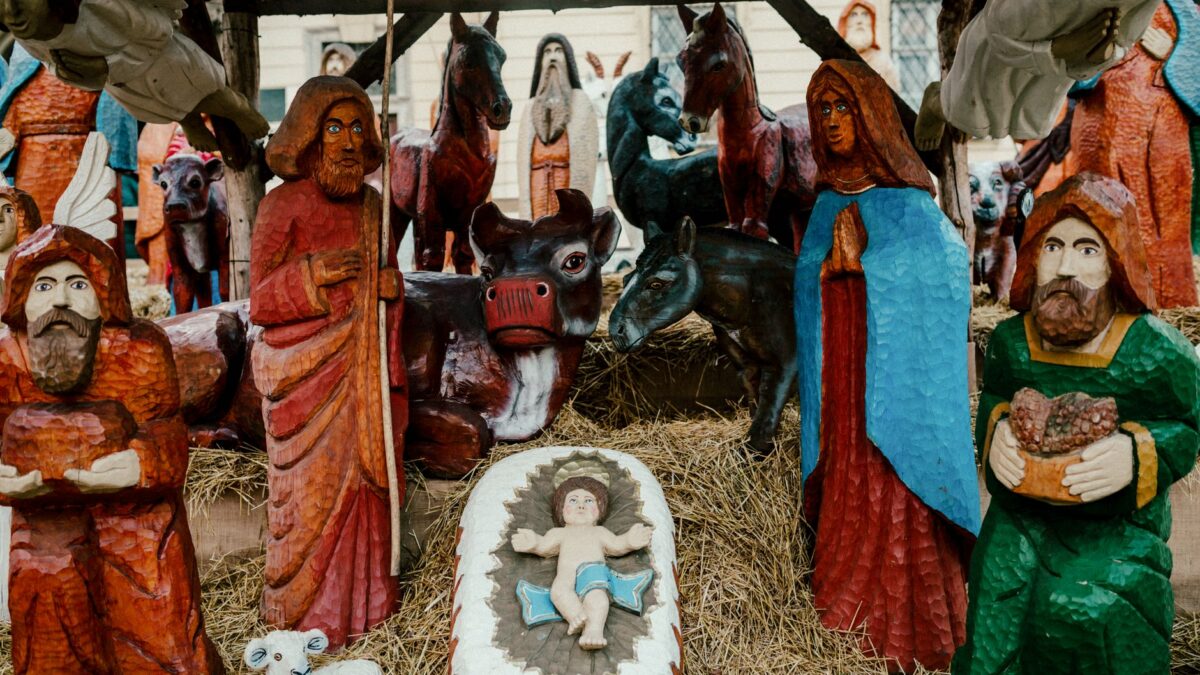
The Fira de Santa Llúcia is Barcelona’s oldest Christmas market, held in front of the Cathedral on Avinguda de la Catedral since 1786. The 2025 edition ran from November 28 to December 23, open every day from 10:00 to 21:00, with 215 stalls. Entry is free, and the nearest Metro station is Jaume I (L4).
As of early November 2026, the organizers had not yet published the dates of the 2026 fair, so treat the 2025 figures below as the reference and check before you go.
When is the Fira de Santa Llúcia in 2026?
The exact 2026 dates were not yet announced in early November 2026. The organizers’ website, firadesantallucia.cat, still showed the 2025 edition, and the Ajuntament (city council) had not listed the new one in its agenda.
The pattern is stable, though. According to the Ajuntament’s popular culture page on the fair, the stalls go up at the end of November or the start of December, always before December 13, the feast of Saint Lucy, and stay until Christmas. In recent editions the last day was December 23.
| Detail | 2025 edition | 2026 edition |
|---|---|---|
| Dates | November 28 to December 23 | Not yet published (early November 2026) |
| Opening hours | 10:00 to 21:00, every day | Not yet published |
| Stalls | 215 | Not yet published |
| Location | Avinguda de la Catedral and Pla de la Seu | Same site every year |
| Entry | Free | Free |
The fair is run by the Associació Fira de Santa Llúcia, the stallholders’ association, together with the Ciutat Vella district.
What do the stalls sell?
Santa Llúcia is a fair for building a Catalan nativity scene (pessebre) and decorating the house, not a food market. In 2025, the Ciutat Vella district counted 91 stalls for Christmas trees, moss and plants, 90 for nativity scenes and figures, and 34 for crafts. What you will find:
- Nativity figures in clay, resin and wood, from the Holy Family and shepherds to the Three Kings, plus miniature houses, bridges, wells, rivers and lights to build the landscape.
- Caganers, the squatting figure Catalans hide in a corner of the nativity scene. Besides the traditional peasant in a red cap (barretina), stalls sell caganers modeled on footballers, politicians and other public figures.
- Moss, cork bark and greenery (molsa and suro) for the ground and hills of the scene, along with Christmas trees and seasonal plants.
- Tions, the logs with a painted face and a red hat that children “feed” in December and beat on Christmas Eve until they “poop” sweets. Sizes range from small enough for a shelf to large family logs.
- Crafts and gifts: ceramics, textiles, jewelry and leather goods.
- Traditional instruments such as the simbomba, a friction drum played with Christmas carols, and tambourines.
Prices vary widely, from a few euros for a small figure or a bag of moss to much more for handmade figures, so compare a few stalls before buying. Caganers and small figures also make light souvenirs; our guide to what to buy in Barcelona covers other local gifts.
Why is it called Santa Llúcia, and how old is it?
The fair takes its name from Saint Lucy (Santa Llúcia), whose feast day is December 13 and whose chapel forms part of the Cathedral complex. Its first known mention dates from 1786, in the diary of Rafael d’Amat, Baron of Maldà, who described stalls selling nativity houses and clay and cardboard figures. The folklorist Joan Amades later accepted 1786 as the starting date. The Ajuntament counted the 2025 fair as its 239th edition.
The fair looked different in the past. In the 19th century the figure stalls opened for only a few days, and moss, cork and herbs for the landscape were sold at a separate market on the Cathedral steps. In the early 20th century a stall was little more than a board on two supports under a waxed canvas, lit by oil or acetylene lamps.
What else happens at the fair?
The fair runs a small program of family activities each year. The 2026 program had not been released in early November 2026. In 2025 it included:
- A giant tió for children under 12 on set days in December, with a sweet and a leaflet on Christmas customs for each child.
- The Carassa de Nadal, a costumed Christmas parade that throws sweets to children, at noon on several weekends.
- On December 13, the Diada de les Tradicions i Costums Nadalencs de Catalunya, a day of Catalan Christmas traditions in the Pla de la Catedral with dance, puppets and choirs. The 2025 event was the 32nd.
The city’s own nativity scene in Plaça de Sant Jaume is a five-minute walk away. Our overview of Christmas in Barcelona explains the tió, the nativity scene and the Three Kings parade in more detail.
How do you get there by Metro?
- Take L4 to Jaume I, the closest station. Walk a short way up Via Laietana and turn left onto Avinguda de la Catedral, where the stalls start.
- From L3, get off at Liceu and walk up through the Gothic Quarter via Carrer de la Portaferrissa, about ten minutes.
- From Catalunya (L1, L3, FGC and Rodalies), walk down Avinguda del Portal de l’Àngel to Plaça Nova, also about ten minutes.
Afternoons, weekends and December 13 are the busiest times, and the aisles between stalls are narrow. Keep bags zipped and phones in front pockets; our guide to pickpockets in Barcelona lists the usual tricks in crowded areas.
What about the Sagrada Família Christmas market?
The Fira de Nadal de la Sagrada Família is the second traditional Christmas fair in the city. According to the Ajuntament’s page on the Sagrada Família fair, it began as an offshoot of Santa Llúcia, when the Cathedral fair ran out of room and a group of stallholders moved to the Eixample, and it has been held in Plaça de la Sagrada Família since 1962. The Ajuntament’s agenda lists the 2026 edition from November 21 to December 23, 2026, daily from 10:00 to 21:00.
It is smaller, with around 100 stalls in four sections: trees and plants; nativity figures and decorations; food and sweets; and gifts such as crafts, costume jewelry and clothing. Take L2 or L5 to Sagrada Família.
| Fair | Where | Dates | Stalls | Metro |
|---|---|---|---|---|
| Fira de Santa Llúcia | Avinguda de la Catedral | 2026 not yet published (2025: Nov 28 to Dec 23) | 215 (2025) | Jaume I (L4) |
| Fira de Nadal de la Sagrada Família | Plaça de la Sagrada Família | Nov 21 to Dec 23, 2026 | About 100 | Sagrada Família (L2, L5) |
Bottom line
Go on a weekday morning in the first week: the choice of figures and tions is widest and you can actually stop at a stall. If you need moss or a tree, buy it last, close to the day you build the scene, because fresh greenery dries out in a heated flat. For a calmer browse with food stalls, the Sagrada Família fair is already open from November 21.
FAQ
Is the Fira de Santa Llúcia open on Sundays and holidays?
Yes. In 2025 it opened every day from 10:00 to 21:00, including weekends and the December 8 holiday.
Is the fair open on Christmas Eve?
No. Recent editions closed on December 23, and the stalls are taken down before Christmas.
Does Santa Llúcia sell food?
Very little. Its sections are nativity figures, greenery, crafts and music. The Sagrada Família fair has a dedicated food and sweets section.
Where can I buy a caganer?
Both Christmas fairs sell them, and Santa Llúcia has the widest choice, from traditional figures to caricatures of well-known people.