Barcelona Beaches: Lifeguard Season, Flags, Rules and Fines
The city beaches run from Sant Sebastià to the Fòrum. Here is when lifeguards are on duty, what the flags mean and which rules the Guàrdia Urbana enforces.
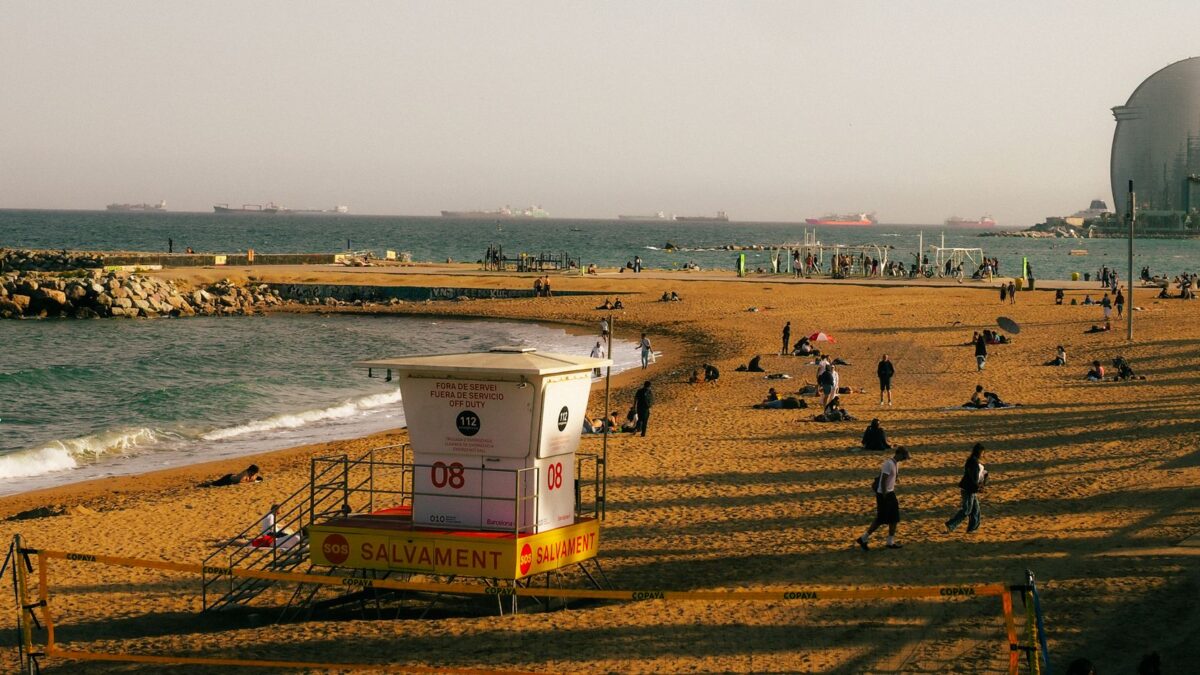
Barcelona’s city beaches have lifeguards only during the bathing season. In 2026 the high season ran from 30 May to 13 September, with lifeguards on duty from 10:30 to 19:30, plus shorter mid-season periods in spring and autumn. Smoking is banned on every city beach, and outside the season the only help is the 112 emergency number.
Which beaches does Barcelona have?
The city’s beaches line the coast from the port, next to La Barceloneta, to the Fòrum at the north-east edge of the city, in the Ciutat Vella and Sant Martí districts. The Ajuntament’s beach pages name these beaches and bathing areas:
- Sant Sebastià and Sant Miquel
- La Barceloneta and Somorrostro
- Espigó del Gas and Nova Icària
- Bogatell, Mar Bella and Nova Mar Bella
- Llevant and the Fòrum bathing area
La Barceloneta is the closest to the old town, while the beaches from Bogatell onward border the Poblenou neighborhood.
As of November 2026, the Fòrum bathing area is closed for construction work, with no confirmed reopening date. Metro line L4 runs parallel to the coast and is the usual way to reach the beaches by public transport; our guide to Barcelona transport passes explains the fares.
When are lifeguards on duty?
The Ajuntament sets a calendar each year with three levels of service. For 2026, its bathing season page gives:
| Season | 2026 dates | Lifeguards |
|---|---|---|
| High | 30 May to 13 September | 10:30 to 19:30, all beaches |
| Mid | Late March, Easter weekends, late April, May, 14 to 27 September and 3 to 4 October | 10:30 to 18:30, all beaches |
| Low | Rest of the year | None; call 112 in an emergency |
The 2027 calendar is published in spring. In November you can still swim, but there is no rescue service on the sand.
What do the beach flags mean?
Lifeguard towers fly a colored flag that shows sea conditions, including currents. Spanish beaches use the same three colors:
- Green: swimming allowed
- Yellow: swim with caution and stay in shallow water
- Red: swimming not allowed
The city’s safe bathing advice also tells swimmers to:
- always follow the flag and the lifeguards’ instructions
- stay inside the yellow buoys and away from breakwaters and harbor water
- if caught in a current, not swim against it: stay afloat and raise an arm for help
- check the depth before diving
- avoid swimming after drinking alcohol
What should you do about jellyfish?
Do not touch jellyfish, even dead ones on the sand, and do not try to remove them from the water. If you are stung, the city advises:
- Get out of the water and go to the lifeguard post if there is one.
- Rinse the area with seawater, never fresh water.
- Remove visible tentacles with tweezers or gloves.
- Apply ice in a bag, never directly on the skin.
- Go to a health center if it does not improve, or if you feel shaky, sick, dizzy or in severe pain.
What is banned, and what can you be fined for?
Barcelona’s beaches have been smoke-free since summer 2022, and the ban covers all tobacco use, including in the Fòrum bathing area. Other rules from the Ajuntament, as of November 2026:
- Breakwaters: walking on them, fishing from them or climbing them to dive is forbidden.
- Fishing: recreational surface fishing is allowed in the marked area of La Barceloneta from 19:00 to 21:00, and on all beaches from 21:00 to 10:00.
- Alcohol and public order: a new Ordenança de Convivència (civic behavior bylaw) took effect on 15 February 2026. Drinking alcohol in public where it is restricted can be fined, with fines of up to €1,500 when minors are present or in areas with night restrictions. Urinating in public can cost up to €750 at sensitive spots.
- Street selling: unlicensed street vending was the behavior most reported to the city in 2025, and the Guàrdia Urbana patrols the beaches against it. Buy from the licensed beach bars and kiosks instead.
- Waste: empty containers go in the yellow bins, other waste in the grey bins, and cigarette ends must not be left in the sand.
What services do the beaches have?
- Toilets: public toilets at several beaches, and the toilets in beach bars are open to the public all season. In the low season, public toilets stay open at Sant Sebastià, Somorrostro, Bogatell and Nova Mar Bella from 10:00 to 19:00.
- Assisted bathing: help for people with reduced mobility at Nova Icària and, in high season, at La Barceloneta and Bogatell too.
- Purple Points: support for victims of gender violence and LGBTI-phobia, including a daytime point at the Bogatell groyne and night points on summer weekends.
- Beach bars, loungers and parasols: run under a 2026 to 2029 city contract.
The beaches are busiest on the night of Sant Joan, when special rules apply; see our guide to La Revetlla de Sant Joan.
Bottom line
Swim near a staffed tower and inside the buoys, especially on windy days when the yellow or red flag goes up. Outside the season, swim with company and save 112 in your phone; for other urgent situations, our guide to emergency numbers in Barcelona lists the options.
FAQ
Can I swim in Barcelona in November?
Yes, the beaches stay open all year, but there are no lifeguards in the low season. In an emergency, call 112.
Can I smoke on Barcelona beaches?
No. All city beaches have been smoke-free since summer 2022, and the ban covers all tobacco use.
Is the Fòrum bathing area open?
Not as of November 2026. It is closed for works, and the Ajuntament has not confirmed when it will reopen.
Can I drink alcohol on the beach?
Drinking in public where it is not allowed can be fined under the 2026 bylaw, with higher fines near minors or in night-restricted areas. Beach bars are licensed to serve.