Parks and Gardens in Barcelona: 6 Places With Hours and Tickets
Ciutadella, Montjuïc's gardens and the Laberint d'Horta are Barcelona's best-known green spaces. Hours, entry fees, addresses and what to see in each.
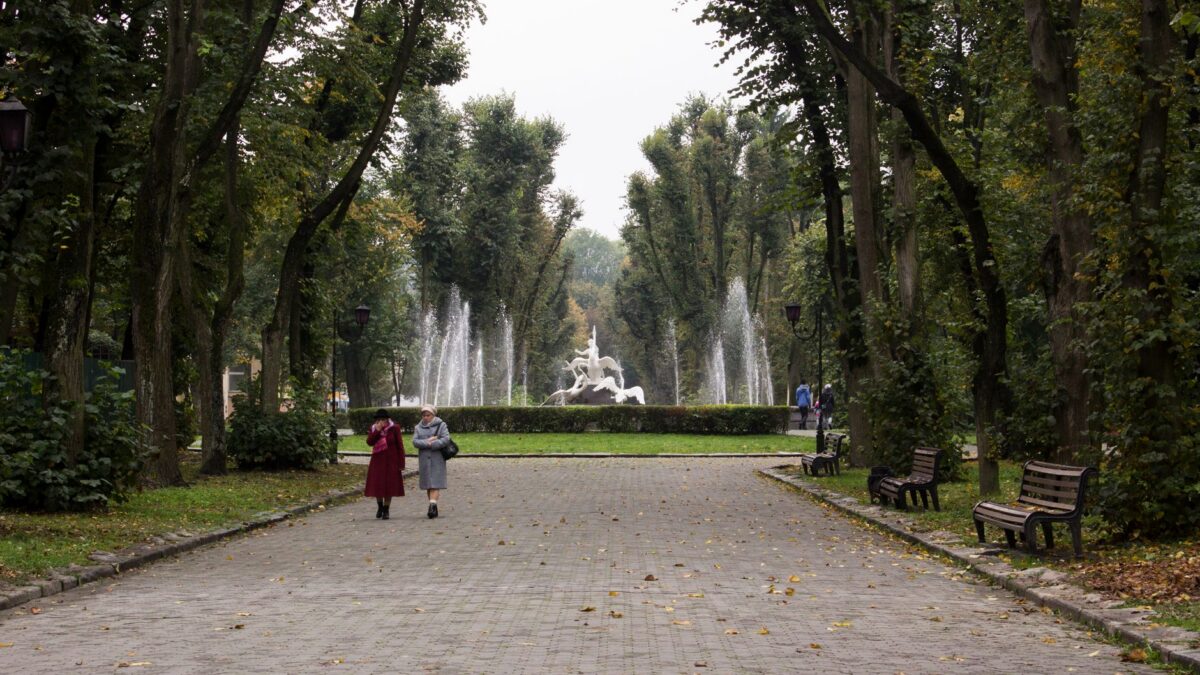
Barcelona’s main parks and gardens are free to enter, with two exceptions: the Laberint d’Horta and the Jardí Botànic on Montjuïc charge a small fee on most days. Parc de la Ciutadella is the central city park, Montjuïc has a botanical garden and a cactus garden, and the Laberint d’Horta is a historic garden in the north of the city whose hedge maze is closed for works until early 2027.
All details below come from the Ajuntament de Barcelona (Barcelona City Council) pages for each park. Opening times at most parks are approximate and follow daylight: gates close at dusk.
Parc de la Ciutadella, Ciutat Vella
Ciutadella sits on the site of a military citadel that Philip V had built in 1715, after Barcelona surrendered on Sept. 11, 1714. General Prim handed the land back to the city in 1869 on condition that it become a public park, and Josep Fontserè drew up the first layout in 1872. The park was later reshaped for the Universal Exposition of 1888, and Barcelona Zoo now takes up half of the grounds.
The centerpiece is the monumental waterfall, designed by Fontserè in 1875 and opened in 1881. A young Antoni Gaudí worked as his assistant, and the rocky decoration is attributed to him. Steps lead up to a small temple-like viewpoint over the park. Other sights are the lake with rowing boats, the stone mammoth put up in 1907, and Joan Roig Soler’s statue La dama del paraigua (Woman with Umbrella). Several buildings from the 1888 exposition still stand: the brick Castell dels Tres Dragons by Domènech i Muntaner, the Umbracle shade house and the Hivernacle glass greenhouse. The old arsenal is now the seat of the Catalan Parliament. The city lists the waterfall as stopped for cleaning work, so check its status before you go.
Address: Passeig de Picasso, 21. Hours: daily from 07:00 until dusk. Tickets: free. Phone: 010. More on the park and its history is on the Barcelona.cat page for Parc de la Ciutadella.
Jardí Botànic, Montjuïc
The Jardí Botànic (Botanical Garden) covers 14 hectares between Montjuïc Castle and the Lluís Companys Olympic Stadium. It is laid out like a steep amphitheater and split into the five regions of the world with a Mediterranean climate, with plants grouped by where they come from. It opened in 1999 and belongs to the Museu de Ciències Naturals de Barcelona (Natural Sciences Museum). From the upper paths you can see the Llobregat delta, the Olympic Ring and much of the metropolitan area.
Address: Carrer del Doctor Font i Quer, 2. Hours: Nov. 1 to Jan. 31, daily from 10:00 am to 05:00 pm, closed Dec. 25 and Jan. 1; Feb. 1 to March 31, 10:00 am to 18:00 pm; later in the year it stays open longer. Tickets: 5 € general, 8 € combined with the Museu de Ciències Naturals, 2.50 € reduced (ages 16 to 29, over 65, unemployed people and some families). Free on Sundays from 3 pm, on the first Sunday of the month, for under-16s and for Barcelona Card holders. Getting there: metro to Plaça Espanya, then bus 50 to the Estadi Olímpic stop. Phone: 932564160. Full rates are on the Jardí Botànic page.
Jardins de Mossèn Costa i Llobera, Montjuïc
This cactus garden sits on the sea-facing slope of Montjuïc. It covers six hectares and holds 800 species of cactus and other succulents from desert, semi-desert, tropical and high-mountain regions. The site has its own microclimate, two to three degrees warmer than the rest of the city according to the council. The garden was created in 1970 and named after the Mallorcan poet Miquel Costa i Llobera. Many plants were lost to frost in 1985 and 1987 and replanted. The council notes that the New York Times once listed it among the best gardens in the world, and that few locals know it, even though it is ten minutes from the Columbus statue.
Address: Ctra Miramar, 38. Hours: Nov. 1 to March 31, 08.00 to 19.00; April 1 to Oct. 31, 08.00 to 21.00 (approximate, closes at dusk). Tickets: free. Details are on the Mossèn Costa i Llobera Gardens page.
Both Montjuïc gardens fit into a day on the hill: see our guide to places to see on Montjuïc, from the castle to the gardens.
Parc del Laberint d’Horta, Horta-Guinardó
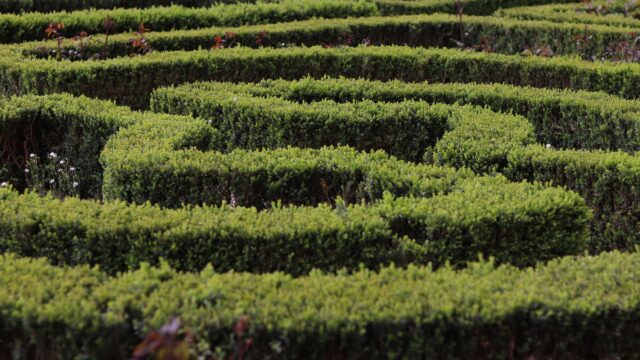
The Laberint d’Horta has the oldest conserved garden in Barcelona. It was laid out in 1791 in the Neoclassical style for the Marquis of Llupià, Poal and Alfarràs by the Italian Domenico Bagutti, and it took on a Romantic style in 1853. On one side you find topiary, small temples with Tuscan columns and a pavilion to the muses; on the other, a waterfall, a stream, shady woodland and a false cemetery. The city bought it in the 1970s, opened it as a public park in 1971 and restored it in 1994 as a museum garden.
The hedge maze itself has been closed since early 2025 and will stay closed until early 2027 for new paving, a new irrigation system, sculpture repairs and the replacement of all its cypresses. The rest of the park is open. Exhibitions in the grounds include one on Nicolau Maria Rubió i Tudurí, running until Dec. 14.
Address: Passeig dels Castanyers, 1. Hours: Nov. 1 to March 31, daily 10:00 to 18:00 (Dec. 25, 10:00 to 14:00); April 1 to Oct. 31, 10:00 to 20:00. Ticket sales stop 1 hour before closing. Tickets: 2.23 € general, 1.42 € reduced (including under-14s and Carnet Jove holders). Free on Wednesdays and Sundays, for under-5s, retired and unemployed people, and for residents of the Horta district who show their DNI. Payment is by card only and there are no reservations. Rules: no pets, bikes, skates, balls or food; capacity is 750 people, and on free days visitors are asked to stay no more than 60 minutes. See the Parc del Laberint d’Horta page before you go.
Parc de la Creueta del Coll, Gràcia
This park in the Coll neighborhood, behind Park Güell, was a stone quarry until it became a public park in the 1980s, partly through local campaigning. Eduardo Chillida’s Elogi de l’aigua, a 54-ton concrete sculpture, hangs over the lake from four steel cables. In summer the crescent-shaped lake becomes a shallow public pool. There are sand pits, picnic areas, works by Ellsworth Kelly and Montserrat Altet, and paths toward the woods of Park Güell. Ramps make the whole park, almost two hectares, accessible.
Address: Pg Mare de Déu del Coll, 77. Hours: Nov. 1 to March 31, 08.00 to 19.00; April 1 to Oct. 31, 08.00 to 21.00 (approximate). Tickets: free. More on the Parc de la Creueta del Coll page.
Park Güell, Gràcia
Gaudí designed Park Güell for Eusebi Güell as a private housing estate. It was built between 1900 and 1914 and opened to the public as a park in 1926, and UNESCO listed it as a World Heritage Site in 1984. The main terrace has a long, curving mosaic bench, and the hill at the top has a calvary of three stone crosses with views to the sea. The city counts it among its historic parks in its list of historic parks, which also includes the Pedralbes palace gardens and the Jardins de Joan Maragall.
Address: Carrer d’Olot 2 – 4. Tickets: since October 2013 the Monumental Zone (terrace, mosaics, viaducts, entrance) needs a ticket, according to Wikipedia’s article on Park Güell; Barcelona residents get in free, and tickets often sell out. Getting there: Vallcarca and Lesseps are the nearest metro stations, though neither is next to the park.
Tips for visiting
- Park closing times in winter are early: Costa i Llobera and Creueta del Coll close at 19.00 from November to March, and Ciutadella at dusk.
- Bring a card to the Laberint d’Horta, since cash is not accepted, and arrive at least an hour before closing.
- For the Jardí Botànic, Sunday afternoons from 3 pm are free.
- With children, Ciutadella’s boats and the Creueta del Coll pool in summer are easy wins; our list of things to do in Barcelona with kids has more ideas.
- For general information on any city park, the council phone line is 010.
Quick answers
Is the Laberint d’Horta maze open?
No. The maze has been closed since early 2025 for works and is due to reopen in early 2027. The rest of the garden is open and still charges entry on paying days.
Which Barcelona parks are free?
Ciutadella, Costa i Llobera and Creueta del Coll are free. The Laberint d’Horta is free on Wednesdays and Sundays, and the Jardí Botànic on Sundays from 3 pm and the first Sunday of the month. Our guide to free things to do in Barcelona lists more options.
Can I bring my dog to the Laberint d’Horta?
No. Pets are not allowed, and neither are bikes, skates, balls or food.
Checked against official sources in November 2026. Hours, prices and rules change: confirm on the official page before you go or apply.