Barcelona to Madrid by Train: AVE, Avlo, Ouigo and Iryo Compared
Renfe's AVE and Avlo, Ouigo and Iryo share the same line between Barcelona Sants and Madrid. Prices move with demand; the real differences are luggage, flexibility and what you get back when a train is late.
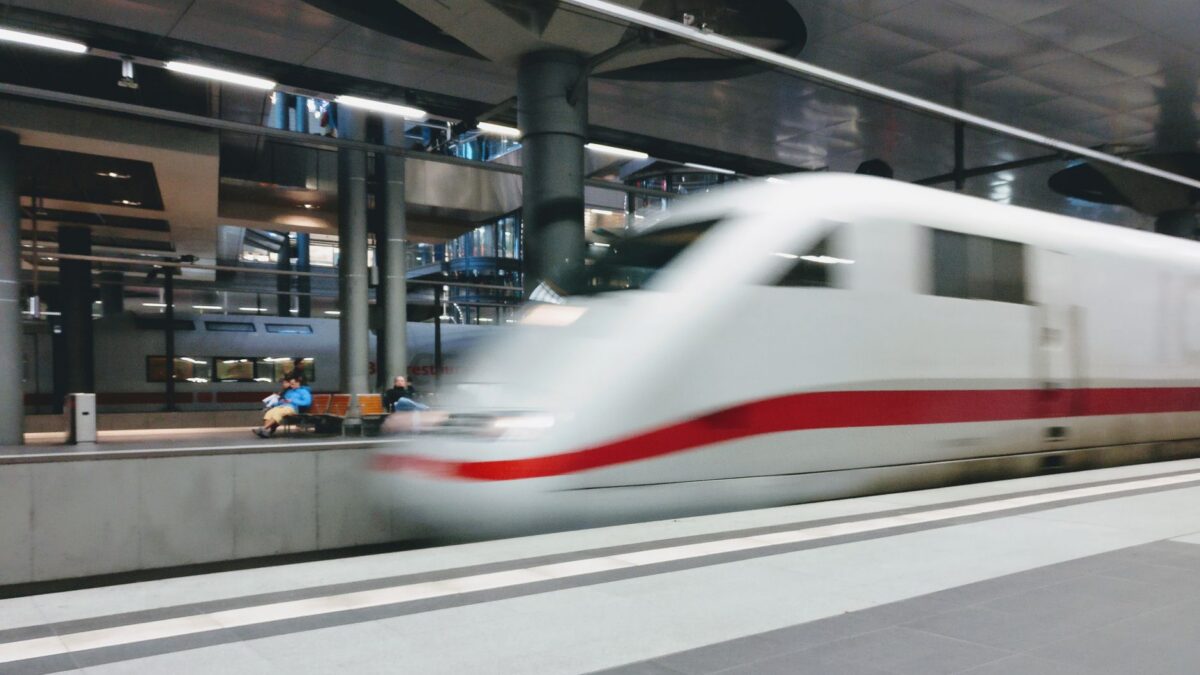
High-speed trains from Barcelona to Madrid leave from Barcelona Sants and are run by four brands: Renfe’s AVE and low-cost Avlo, Ouigo and Iryo. Renfe has advertised about two and a half hours for its fastest direct trains. All four refund at least half the fare for delays of an hour or more, as of November 2026.
Which companies run Barcelona to Madrid trains?
All four use the same high-speed line, managed by Adif, the state rail infrastructure company. They differ in brand style and in what the basic fare includes.
| Operator | Type | Where to buy |
|---|---|---|
| Renfe AVE | Full-service, several fare levels | renfe.com, Renfe app, station ticket offices and machines |
| Renfe Avlo | Renfe’s low-cost brand, fewer extras | Same Renfe channels |
| Ouigo | Low-cost, paid extras for luggage and seats | ouigo.com and its app |
| Iryo | Several fare levels, from basic to premium | iryo.eu and its app |
Fares change with demand, so compare the same date on each site. Midweek and early-morning trains booked weeks ahead are often cheaper than Friday afternoon trains booked the day before.
How long does the trip take, and where does it arrive?
Non-stop trains are the fastest; trains with intermediate stops, such as Camp de Tarragona, Lleida or Zaragoza, take longer. Check the scheduled time on your ticket rather than relying on a general figure.
In Madrid, most trains on this route use Madrid Puerta de Atocha – Almudena Grandes. Check the station name on your ticket, especially if you are connecting to another train. In Barcelona, Sants is linked to Metro lines L3 and L5 and to Rodalies trains; our Rodalies guide covers those connections.
What are the luggage and boarding rules?
Each operator sets its own luggage allowance, and the low-cost fares are the strictest. Ouigo publishes exact sizes in its general conditions of carriage in force from 21 August 2026:
- Hand luggage: up to 36 × 27 × 15 cm.
- Cabin bag: up to 55 × 35 × 25 cm, including handles and wheels.
- Additional luggage: up to 2 m in total (height + length + width) and 25 kg; bikes and scooters count here.
- How many pieces you can bring depends on the fare you bought.
Ouigo also asks passengers to be in the boarding area at least 30 minutes before departure and does not allow boarding in the last five minutes. For Renfe and Iryo, check the allowance shown for your fare when you book, because it varies by ticket type.
Expect a bag security check before the high-speed platforms at Sants, and allow extra time on Friday and Sunday evenings.
How do you buy, change or cancel a ticket?
- Compare the same date and time window on the four operators’ websites or apps.
- Choose the fare level by flexibility, not just price. The cheapest fares usually do not allow changes or refunds, or charge for them.
- Add extras at booking, such as a cabin bag or seat choice on low-cost fares, since adding them later can cost more.
- Keep the ticket in the app or as a PDF; it carries the QR code you scan at the gate.
- To change or cancel, use the same channel where you bought it. The conditions are in the fare rules shown at purchase.
What do you get back if the train is late?
| Operator | Delay at arrival | Compensation |
|---|---|---|
| Renfe AVE and Avlo | 60 minutes or more / over 90 minutes | 50% / 100% of the ticket |
| Ouigo | 30 to 59 / 60 to 89 / 90 minutes or more | 50% non-refundable voucher / 50% / 100% of the fare as a refundable voucher |
| Iryo | Over 60 minutes / over 90 minutes | 50% / 100% of the ticket, under its general conditions |
Renfe’s punctuality commitment lets you claim from 24 hours after the train arrives and up to three months after the trip. AVE passengers can choose a refund to the original payment method, a discount code or Renfe points; Avlo passengers get the refund to the original payment method only. Renfe also says that for tickets bought from 31 January 2026, delays caused by temporary speed limits set by Adif do not give the right to compensation.
EU rules on rail passenger rights also apply to all four operators. If a strike is called, minimum services are published in advance; see our guide to strikes and minimum services.
Bottom line
For a fixed trip, the cheapest fare from any operator usually wins; for a trip that might move, pay a little more for a flexible fare on the same train instead of buying twice. Check the Madrid station and the bag allowance on your ticket before you pack, and file any delay claim within the three-month window.
FAQ
Which operator is the cheapest?
None is always cheapest. Prices change with demand and booking date, so compare the same train times on all four sites, and add the cost of any luggage you need before deciding.
Is the Barcelona to Madrid train faster than flying?
The train runs from city center to city center, with a short security check, while flying adds airport transfers and earlier arrival times. For most trips door to door, the times are close; see our guide to getting from the airport to the city for the Barcelona end.
Can I take a bike on the train?
Ouigo counts bikes and scooters as additional luggage within its 2 m and 25 kg limit. Renfe and Iryo set their own rules; check before booking.
Can I use a T-casual or other city pass to reach Sants?
Yes, Sants is inside zone 1 of the integrated fare system; see Barcelona transport passes.